How Dedicated Studio Acoustic Kits Help Up Your Game
Key Takeaways:
- Getting accurate sound in a critical listening space takes a full-room approach, not a few panels here and there.
- Professional-grade glass wool panels absorb more, last longer and are safer than foam.
- A balanced room helps you make mixes that translate to any system.
- Complete room kits take the guesswork out of choosing panels, placing them and installing them.
- London Room Kits now come in five stocked colours: Black, Grey, Sand, Mocha and Harbour.
Looking to take your studio to the next level? Put down the carpet knife and glue gun, and step away from that pile of foam sheets.
Every recording and content creation space changes as you grow. You get more confident, you learn how sound behaves in your room, and sooner or later you learn how to control it.
At the start, it’s tempting to do as much of the acoustic treatment yourself as you can. Hardware-store foam isn’t completely ineffective. But if you want professional results, “not completely ineffective” isn’t the bar you should be aiming for.

Treating your room is one of the biggest upgrades any creator can make.
Working out how much treatment you need, which materials to use and where to put them can feel overwhelming.
Whether you’re setting up a home studio, a podcast or livestream space, or a home theatre, London Room Kits and our wider range of studio treatments take the guesswork out of getting great sound in your room.
DIY Foam Treatments vs. Professional-Grade Glass Wool Panels
Foam panels do soak up some high frequencies, but they do little to control the low-mids and bass that cause most of the problems in small rooms. High-density glass wool panels are denser and have more mass, so they absorb up to four times more acoustic energy across a much broader, more balanced frequency range.
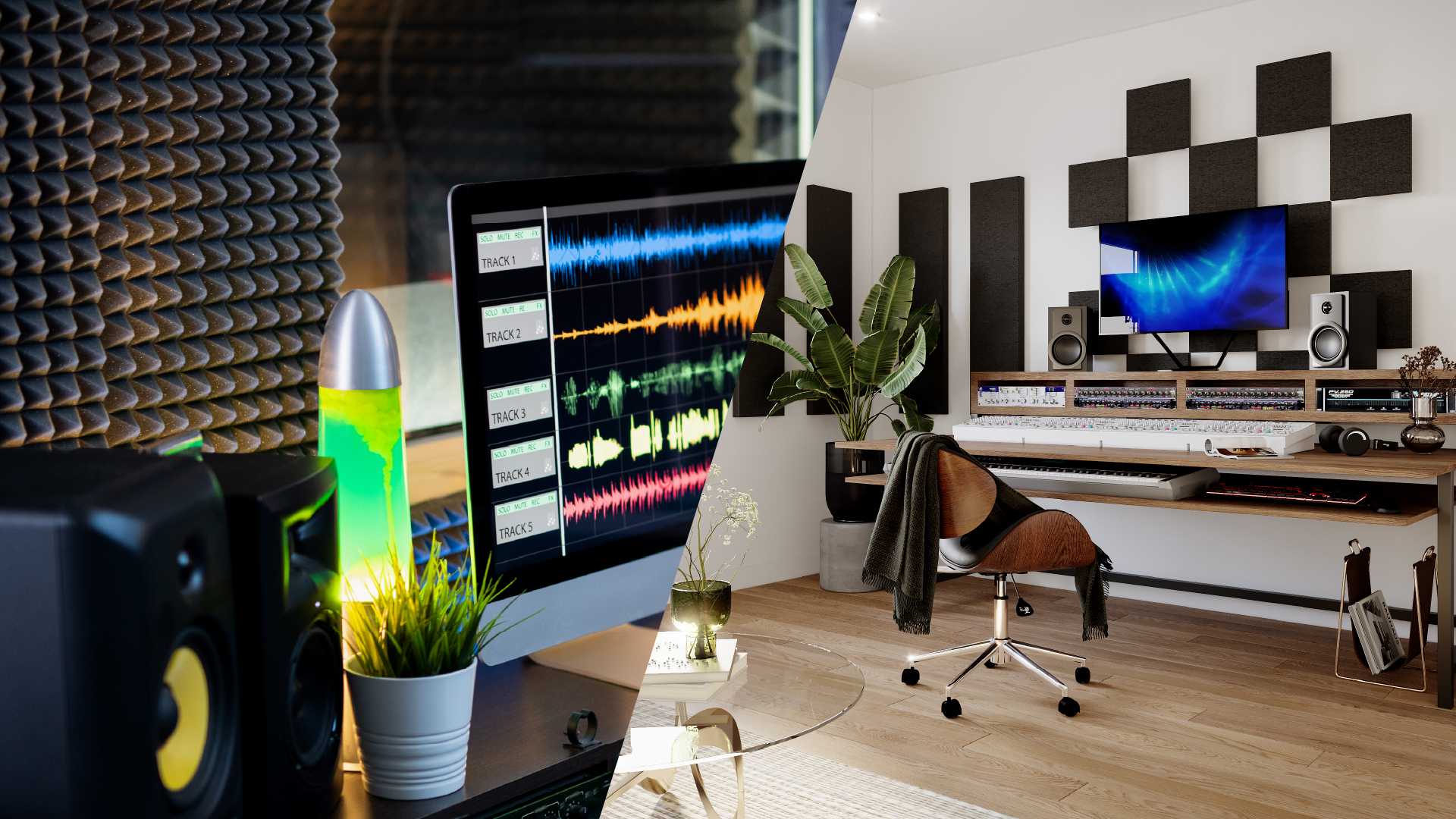
Professional glass wool panels are also built to last. They have rigid, resin-hardened edges, meet Class-A fire safety ratings and keep performing for years without breaking down. Untreated polyurethane foam, by contrast, is highly flammable.
Greater accuracy = Better Results
Think of your room as the last link in your audio chain, and the one you can’t bypass. Like every other link, its quirks shape what you hear when you’re tracking and mixing.
You’ve probably chosen every piece of that chain carefully, from the instrument to the mic or DI to your monitors, to capture exactly the sound you want. Your room deserves the same care, because it affects your recordings as much as your mixes.
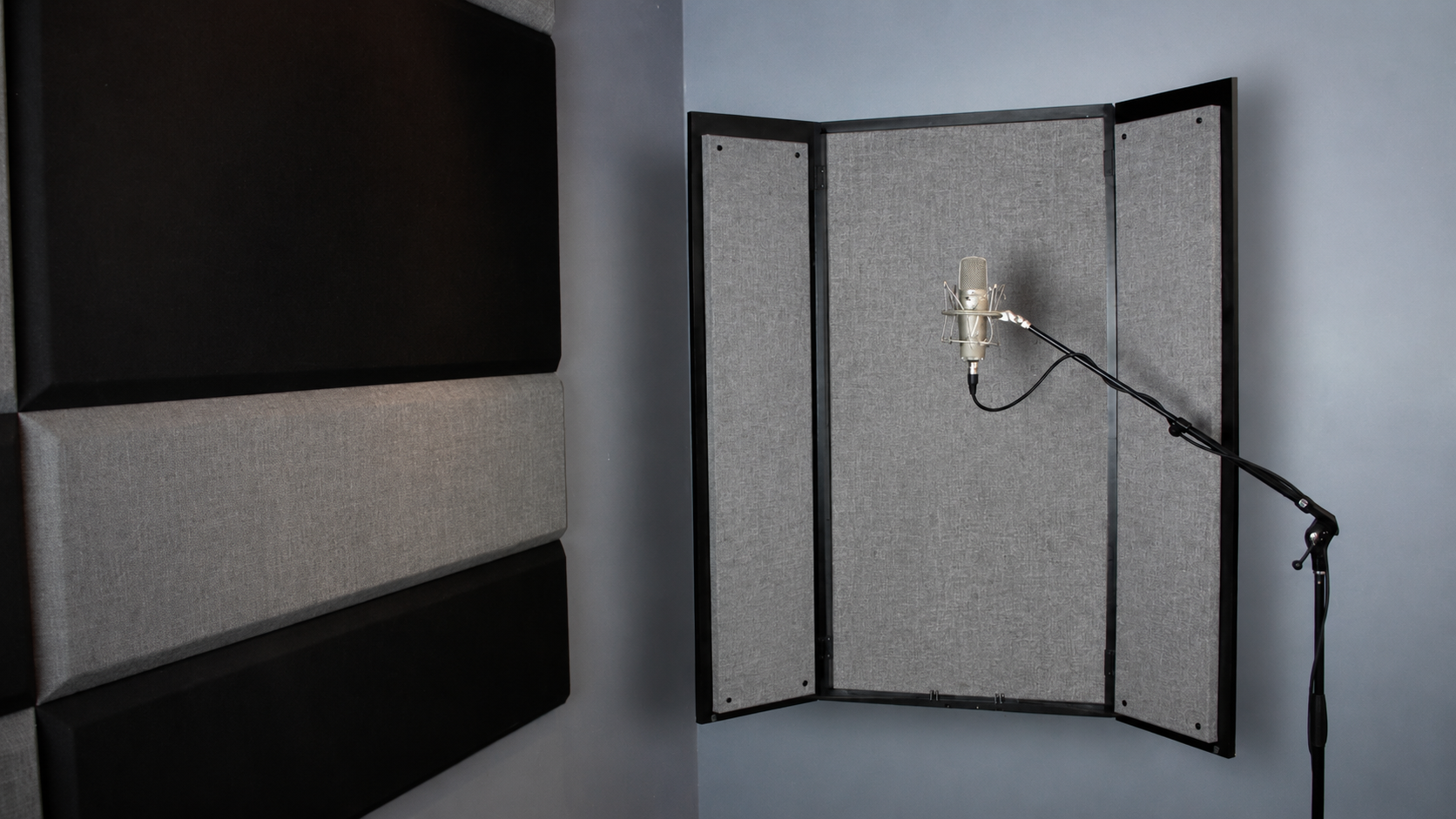
In an untreated or poorly treated room, sound bounces off hard, parallel surfaces. That causes flutter echo, longer reverb tails and phase cancellation, where reflections arriving slightly late cut out or boost certain frequencies. The same thing happens whether you’re recording a guitar amp in the room or just listening back on your monitors, and it can hide details you need to hear.
The more accurate your room, the better your EQ and level decisions, and the better your mix will translate to other systems, from studio monitors to earbuds and car speakers.
The limitations of foam and DIY acoustic treatment
Foam, store-bought or homemade, is an entry-level fix, not a professional one. At best, the results are inconsistent. Mixes can sound right in your room and then fall apart everywhere else.
That’s because foam soaks up the highs but leaves the lows alone. The room ends up dull on top and boomy underneath, and your mixes end up unbalanced. It doesn’t look great either: over time, foam fades, crumbles and collects dust.
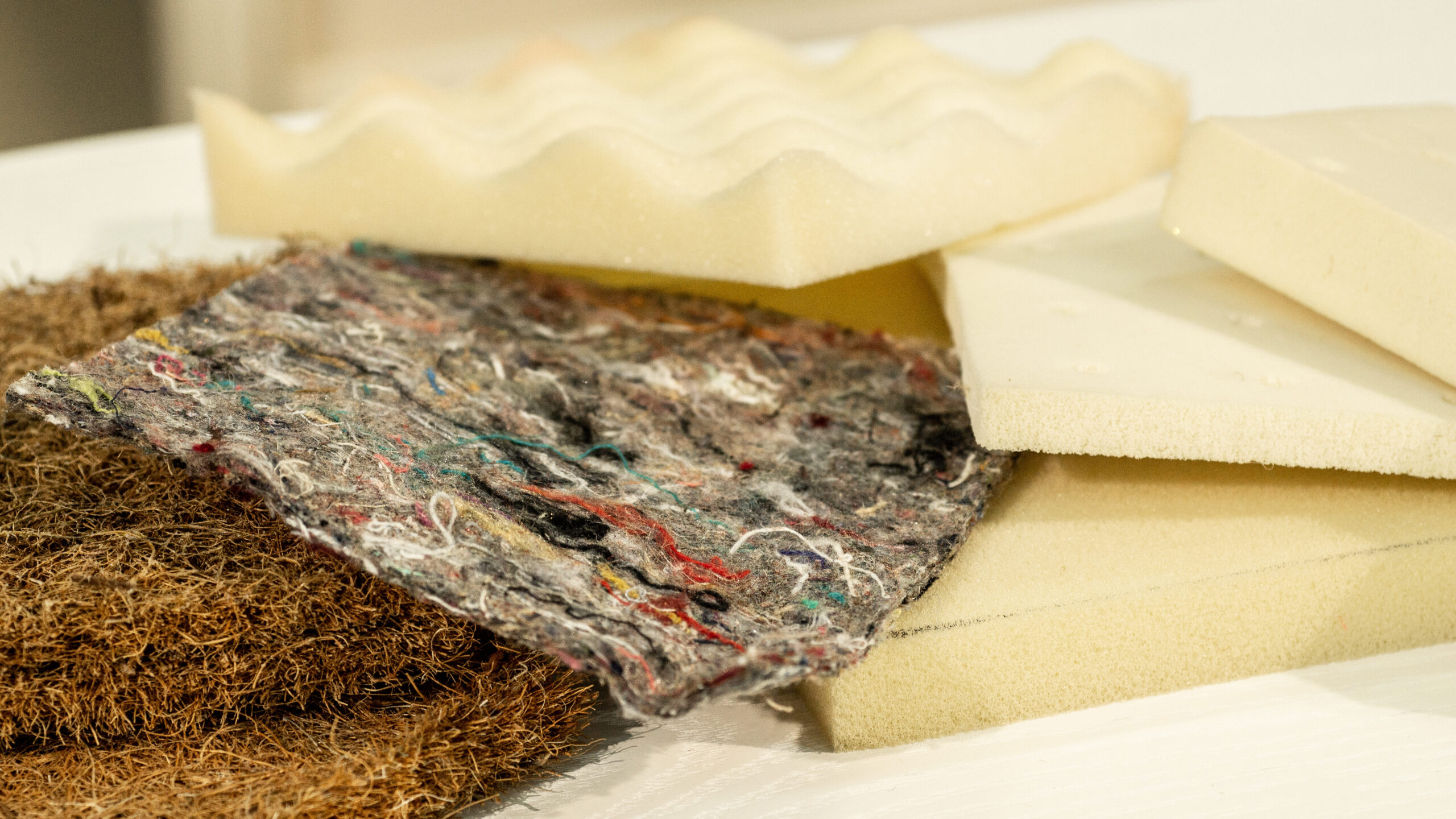
Good sound comes first. But a professional-looking space also gives artists and clients confidence about where they work, and who they work with.
Building your own panels has drawbacks too, even with better materials than foam. It takes time, and unless every panel is built precisely, the results are still inconsistent. Unfinished DIY panels can also shed loose fibres into your room. Precision-built panels that are fabric-wrapped, edge-hardened and tested to strict safety standards solve all of that.
How complete acoustic systems simplify the process for creators
Few things are more frustrating than nailing the perfect take, only to find a problem in the room that you didn’t catch while tracking, and having to start over.
If a mic, instrument or piece of gear isn’t sounding right, you swap it out before you go any further. Your room isn’t that easy to change. That’s why it pays to get the treatment right the first time.
That’s where Primacoustic’s London Room Kits come in.
Comprised of a full set of Broadway high-density glass wool panels for specific-sized rooms, London Room Each London Room Kit is a complete set of Broadway high-density glass wool panels, matched to a specific room size. Better absorption, fire safety and durability are only the start:
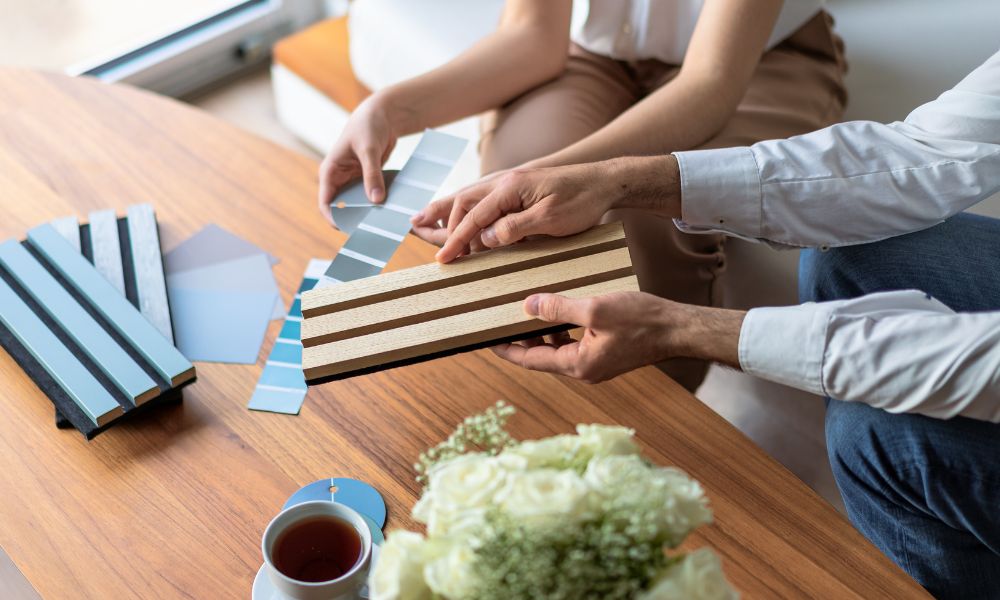
- A look that fits your space. Choose from five stocked colours: Black and Grey, plus three new additions, Sand, Mocha and Harbour.
- No guesswork. The system is lab-tested and verified for accurate acoustic performance, so you know it will work before it goes on the wall.
- Everything works together. The panels are sized and selected to work as one system in small to medium rooms, and every kit includes all the mounting hardware for easy DIY installation.
- Results you can hear. The kits control first reflections and high frequencies, plus the lows and low-mids that muddy a mix. You hear what’s really going on, and you can work longer without the fatigue of a room full of reflections.

A complete studio treatment system in a box: everything you need and nothing you don’t.
Conclusion: Good sound matters, regardless of what type of content you create.
Treating your room is more than a studio upgrade. It’s an investment in your work. Whether you’re a working producer, a podcaster, a content creator or someone making music on your own terms, a full-room approach built on proven treatment gives you, and your clients, confidence in everything you make.
Find your London Room Kit → Now in Black, Grey, Sand, Mocha and Harbour.
Additional Resources:
Designing with Sound in Mind: Why Acoustics Should Start at the Sketch
How to Cut EcoScapes Acoustic Panels Cleanly: Tools and Techniques