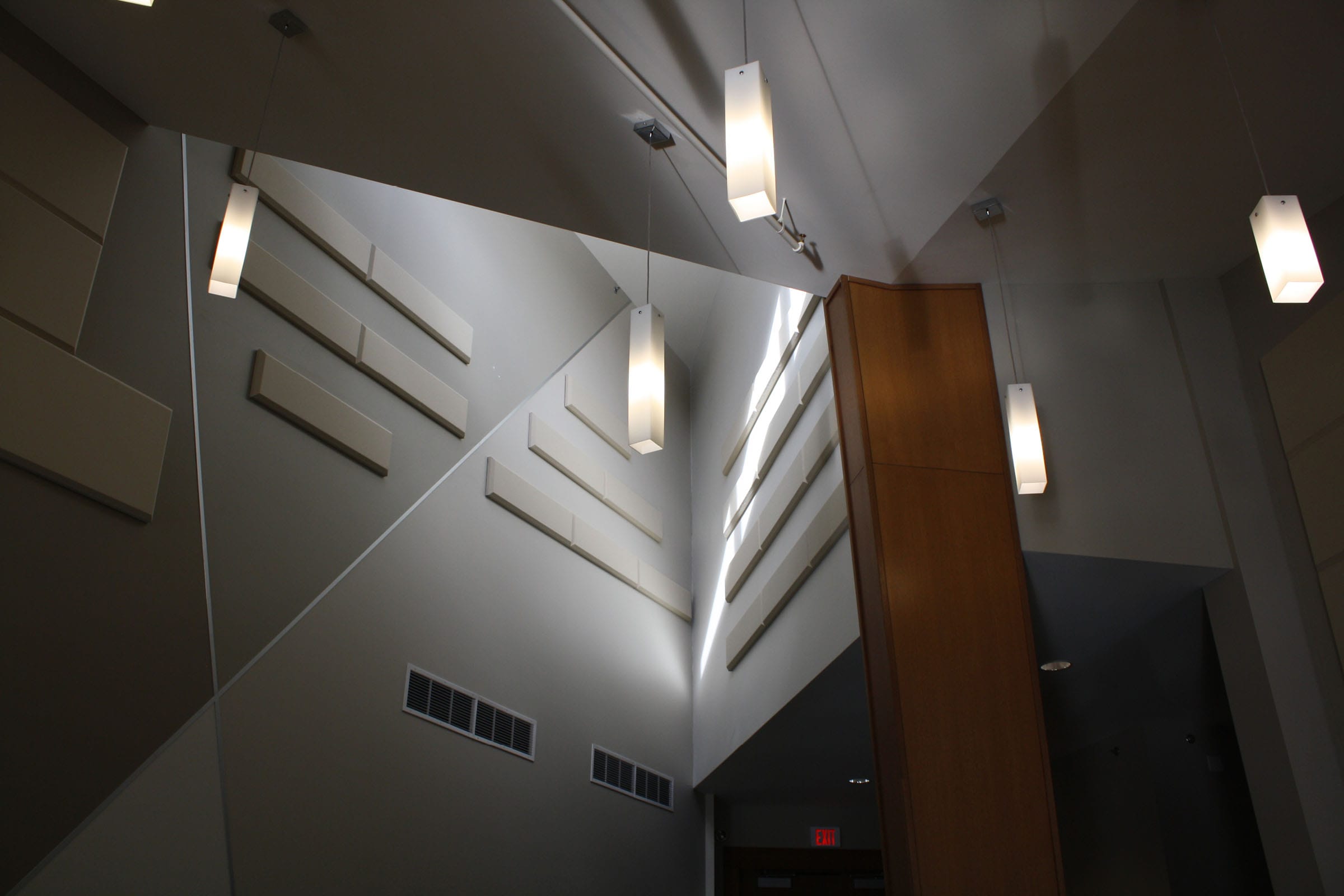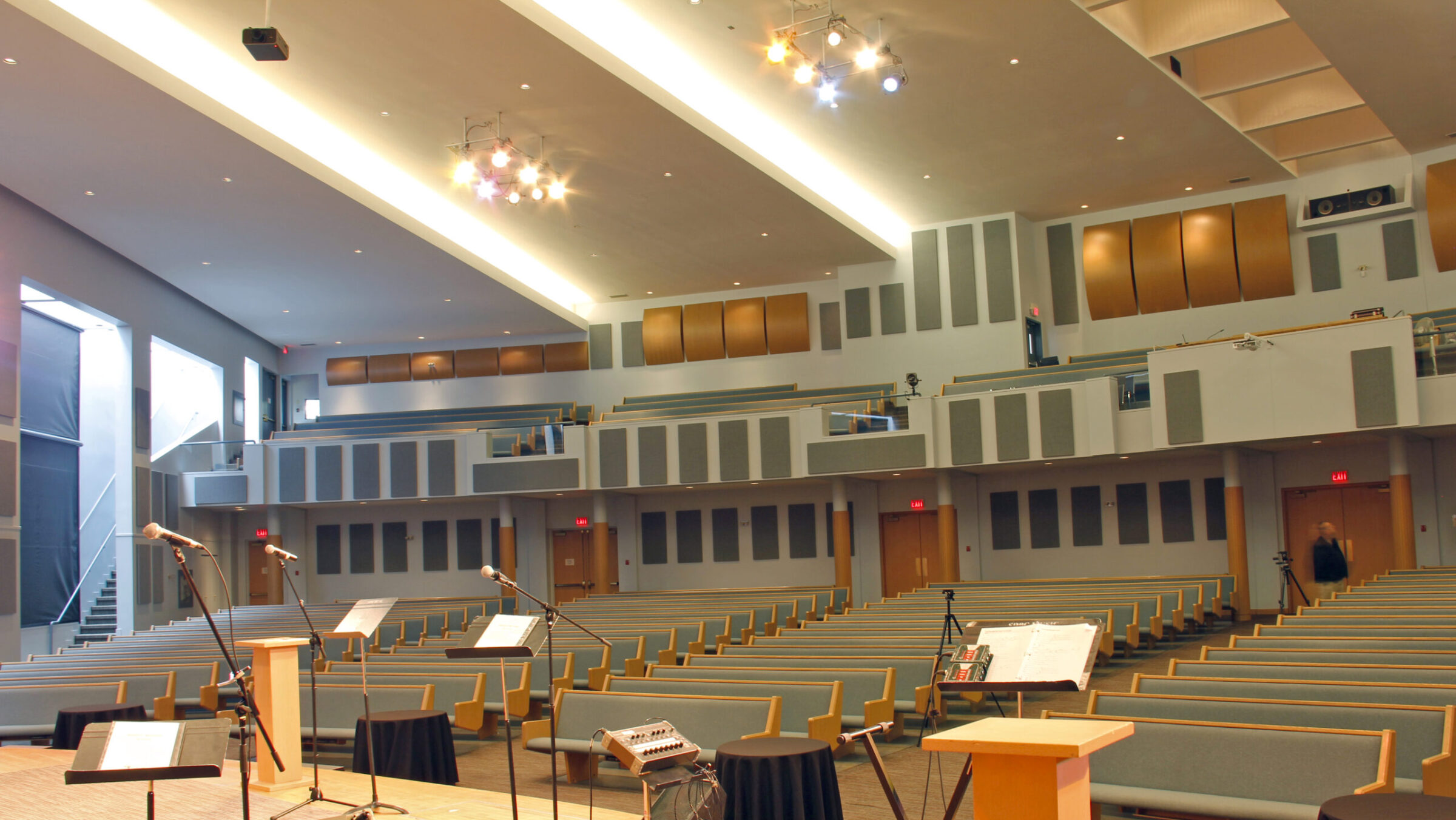
For integrators working in the house of worship (HOW) space, considering and specifying acoustic solutions alongside sound reinforcement systems at the outset of a project is critical. Pairing a worship AV system with acoustic treatments helps meet expectations for maximum speech intelligibility, detailed musical reproduction, and aesthetic/design considerations.
Doing so benefits everyone:
- Maximizing the client’s ROI and satisfaction (and saving cost and time) by delivering clear, intelligible audio while eliminating the need to address unforeseen or unintended acoustic issues after installation.
- Ensuring sound systems and acoustic treatments work together sonically and aesthetically, blend seamlessly with signature architectural elements, preserve sightlines, and enhance rather than detract from a space’s visual design and worship experience.
- Increasing comprehension, engagement, and participation by creating a comfortable listening environment that encourages active participation for existing congregants and supports future growth.
- Scoping acoustic needs and system design simultaneously helps optimize PA and room performance and prevent over-engineering. For example, attempting to ‘brute-force’ a solution with an overpowered PA system.
- Considering the room as part of the system streamlines system tuning and makes mixing easier for volunteer audio technicians and operators, as well as those who train/guide them.
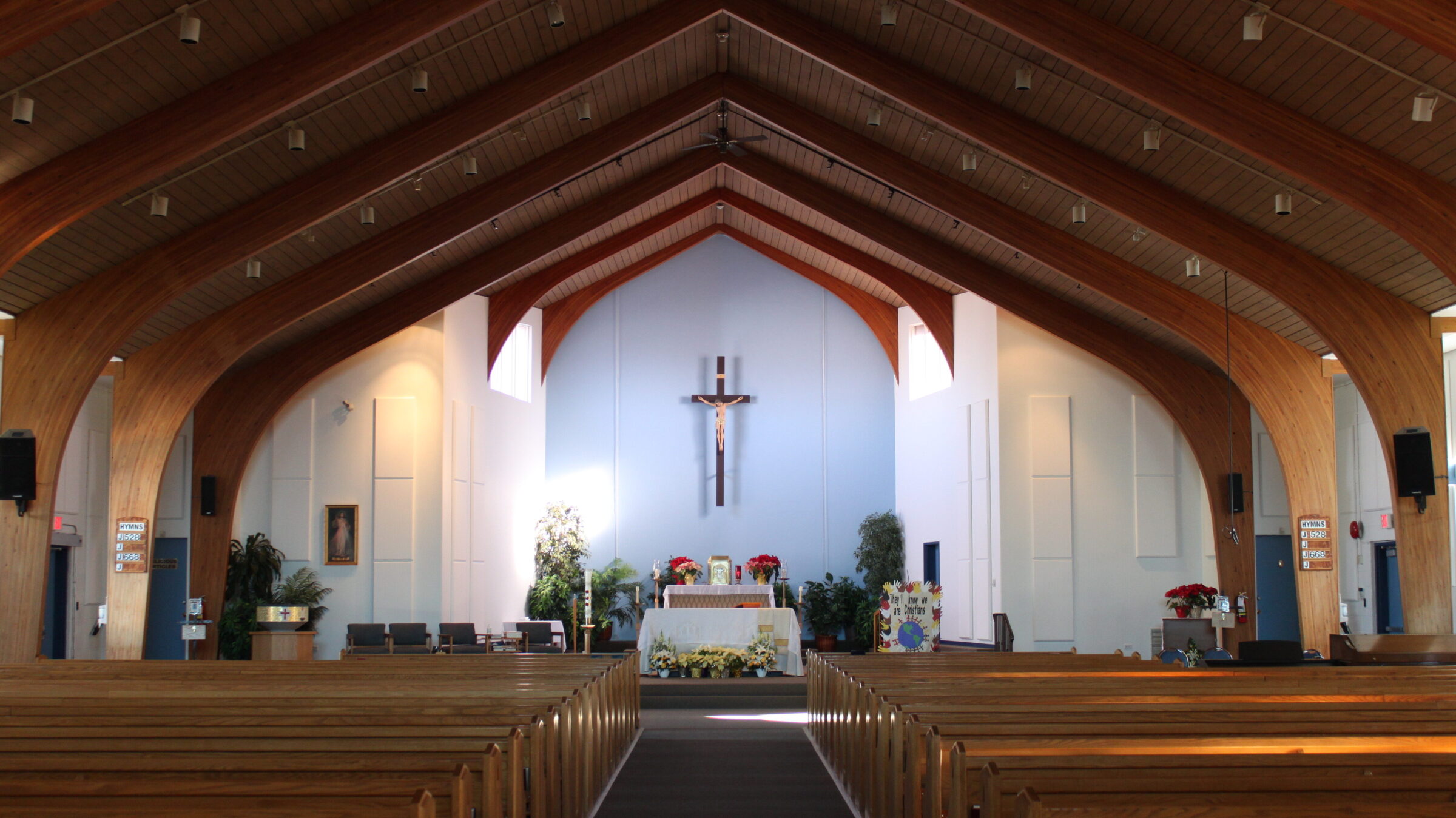
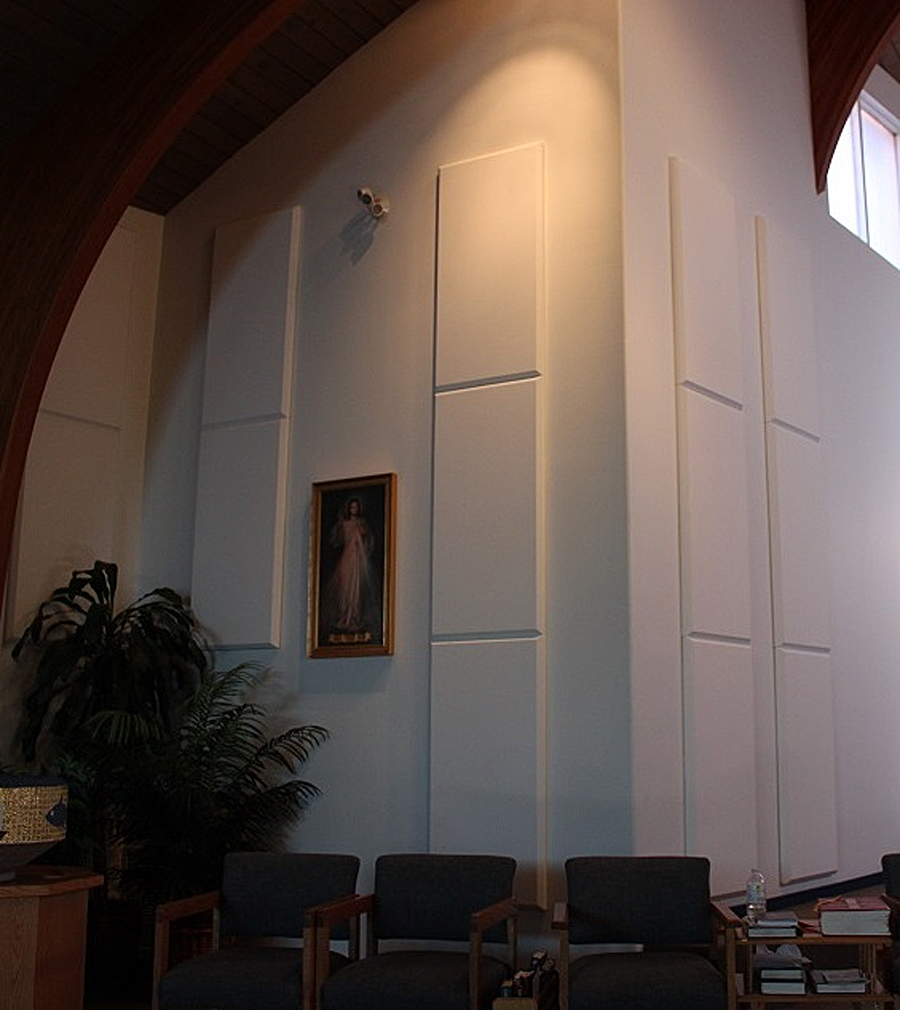
A whole room/system approach helps meet widely varying needs:
Whether providing sound solutions for new construction or a retrofit (for traditional liturgical spaces and modern worship environments alike), there are commonalities in terms of the need to treat, and the benefits of treating, the room as part of the system:
- Achieving maximum clarity throughout the space while preserving the atmosphere and experience for congregations.
- Minimizing the need for post-installation acoustic remediation, re-aiming, or altering loudspeaker placement.
- Adhering to budget, timeline, aesthetic, and design constraints is key in any project, but often more crucial in HOW projects, where resources may be limited and full or partial upgrades can only be undertaken rarely.
All that said, no two worship spaces are exactly alike. Size, construction, layout, worship style, the role and type of music in services, and usage will impact what acoustic/audio system solutions are most appropriate.
What’s ‘appropriate’ in a traditional liturgical space like a cathedral, compared to a megachurch more akin to a performing arts venue, or small or mid-sized community churches, will vary widely.
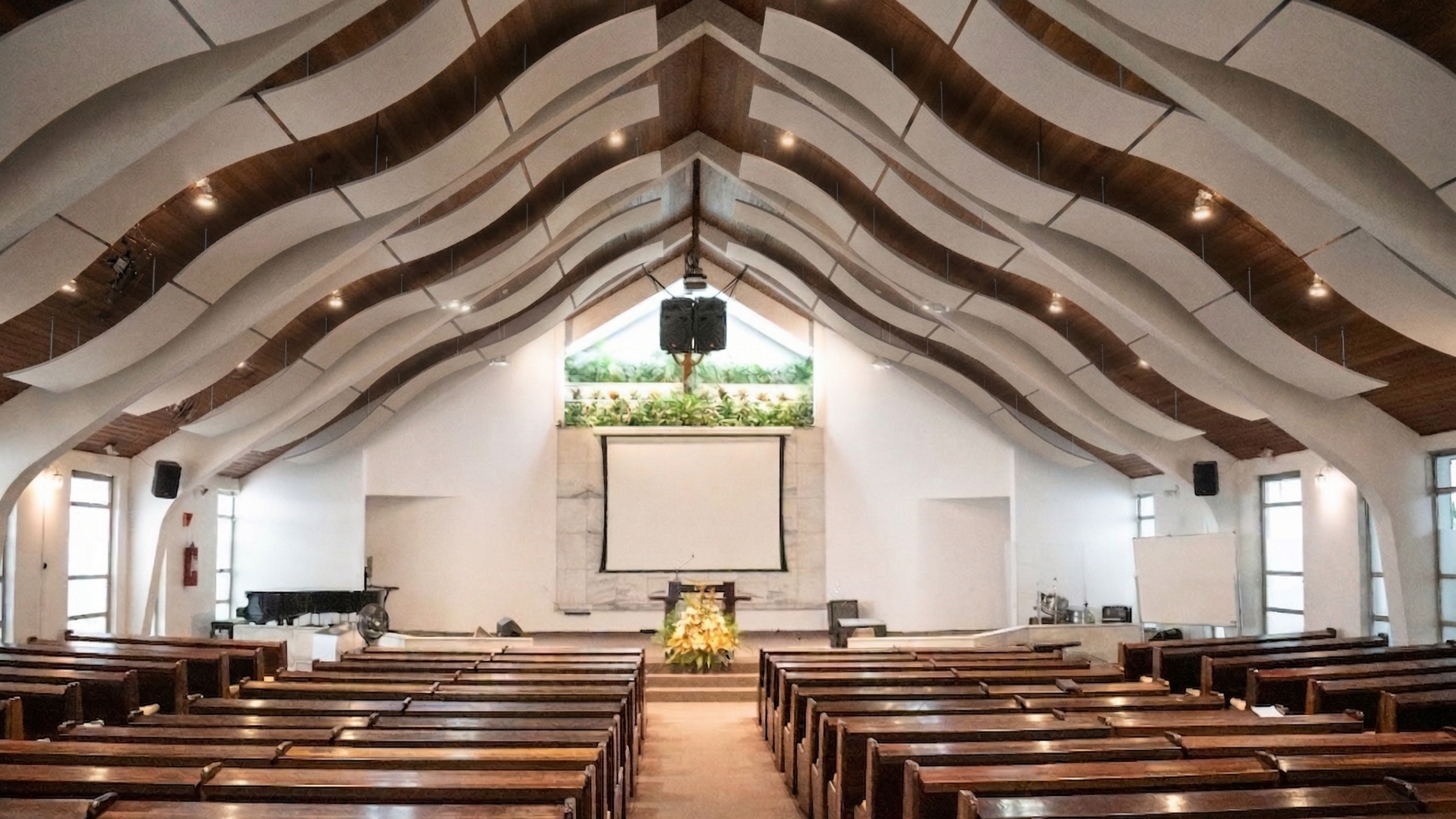
Custom Considerations:
Houses of worship frequently require more specialized or custom acoustic treatments than standard workspaces, schools, or public buildings due to:
Architectural Complexity: For example, the combination of large-volume spaces, vaulted or dome ceilings, hard masonry (stone/brick), and large glass expanses can result in severe, complex echo patterns that off-the-shelf panels cannot easily resolve.
Conflicting Acoustic Requirements: Houses of worship require a delicate acoustic balance between amplifying live bands and preserving enough natural reverberation to support traditional choir singing, pipe organs, and congregational participation.
Aesthetic and Historic Constraints: Many sanctuaries feature stained glass, historic woodwork, ornate trim, or protected architectural features that prevent standard, cookie-cutter wall treatments. Custom sizes, curved panels, specialized colour matching, or hidden treatments are frequently required to blend into the sacred architecture.
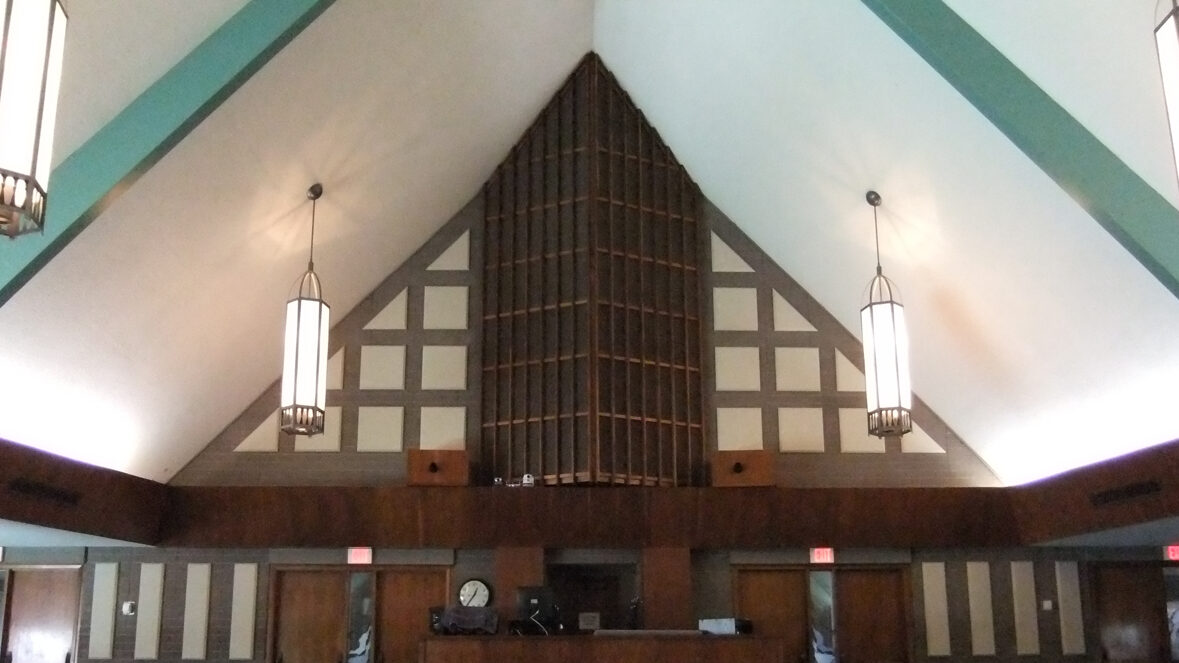
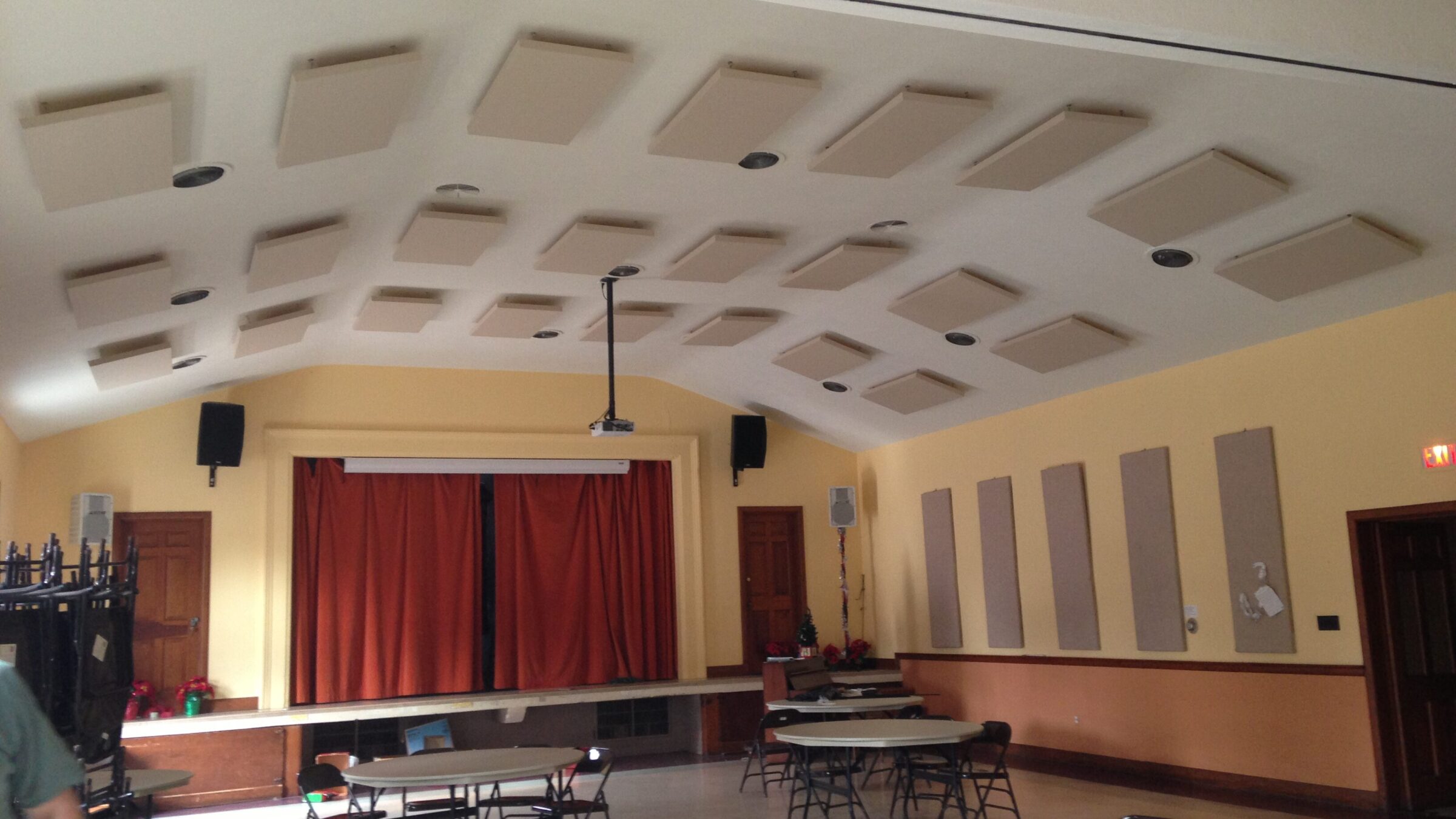
Scoping acoustic treatments and audio systems together helps integrators balance sound reinforcement, aesthetics, and acoustic considerations.
The results?
Smoother installs, seamless integration with critical infrastructure like lighting, HVAC, and architectural elements, and, by extension, happy clients.
Clarity is always critical. How to achieve it, while balancing performance and aesthetics, varies. What matters most is reinforcing and facilitating meaningful connection between the pulpit and pews, regardless of the setting. The more tools integrators can leverage to enhance that connection and encourage participation, the better.
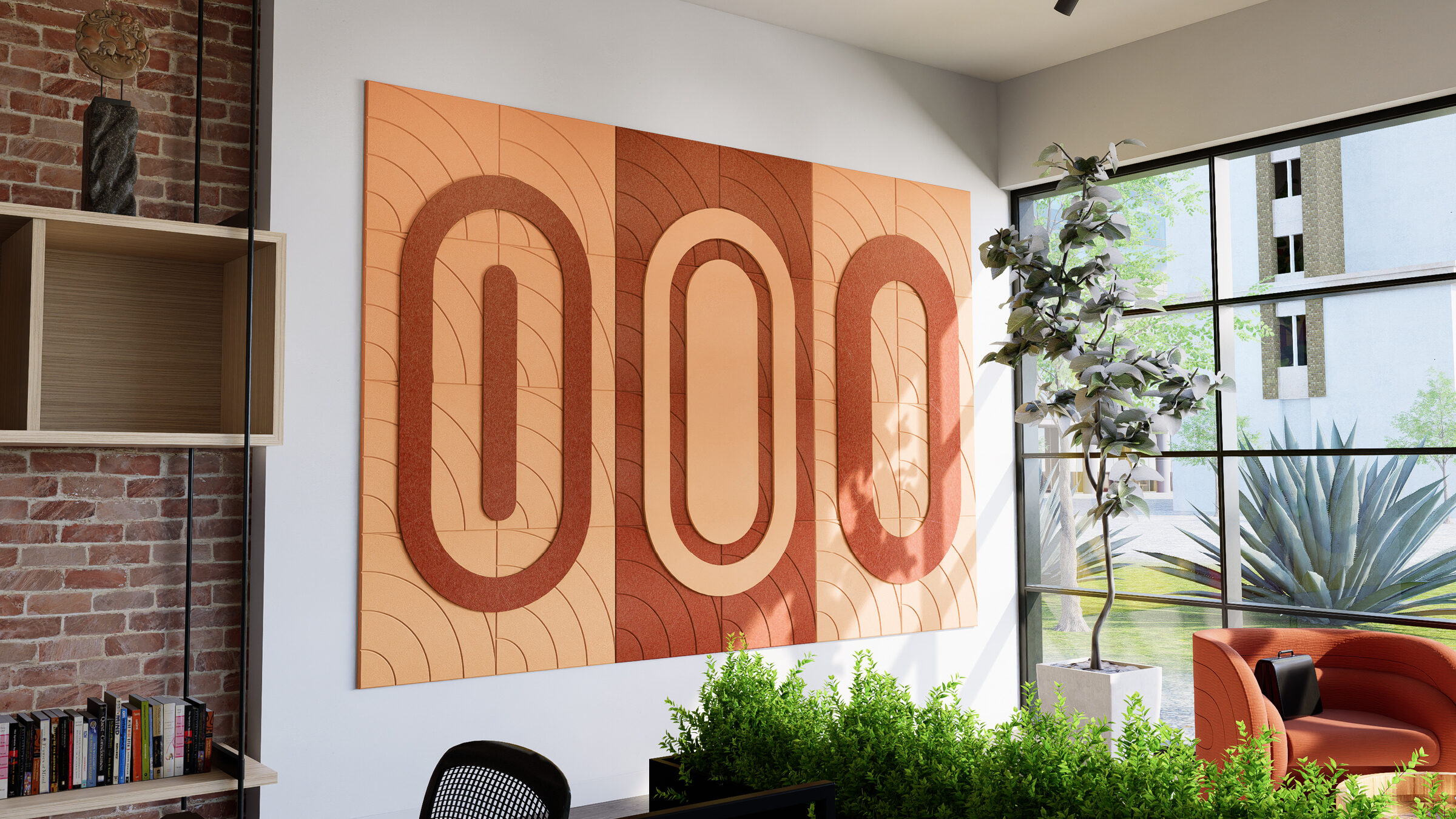
That’s a driving force behind Primacoustic’s wide product range: studio-grade Broadway glass wool treatments; flexible, highly customizable options such as our fabric-covered Telascapes and Archadia custom line; paintable and printable panels; modern ceiling tile solutions like Gridway; and others. Including our EcoScapes line of sustainably sourced PET products; a sound control system that can be applied to every surface in a space, consisting of wall panels, ceiling clouds, architecturally artful options such as Slat Wall, Blades, Dimensional Baffles, and our Contour CNC precision-cut and –carved treatments.
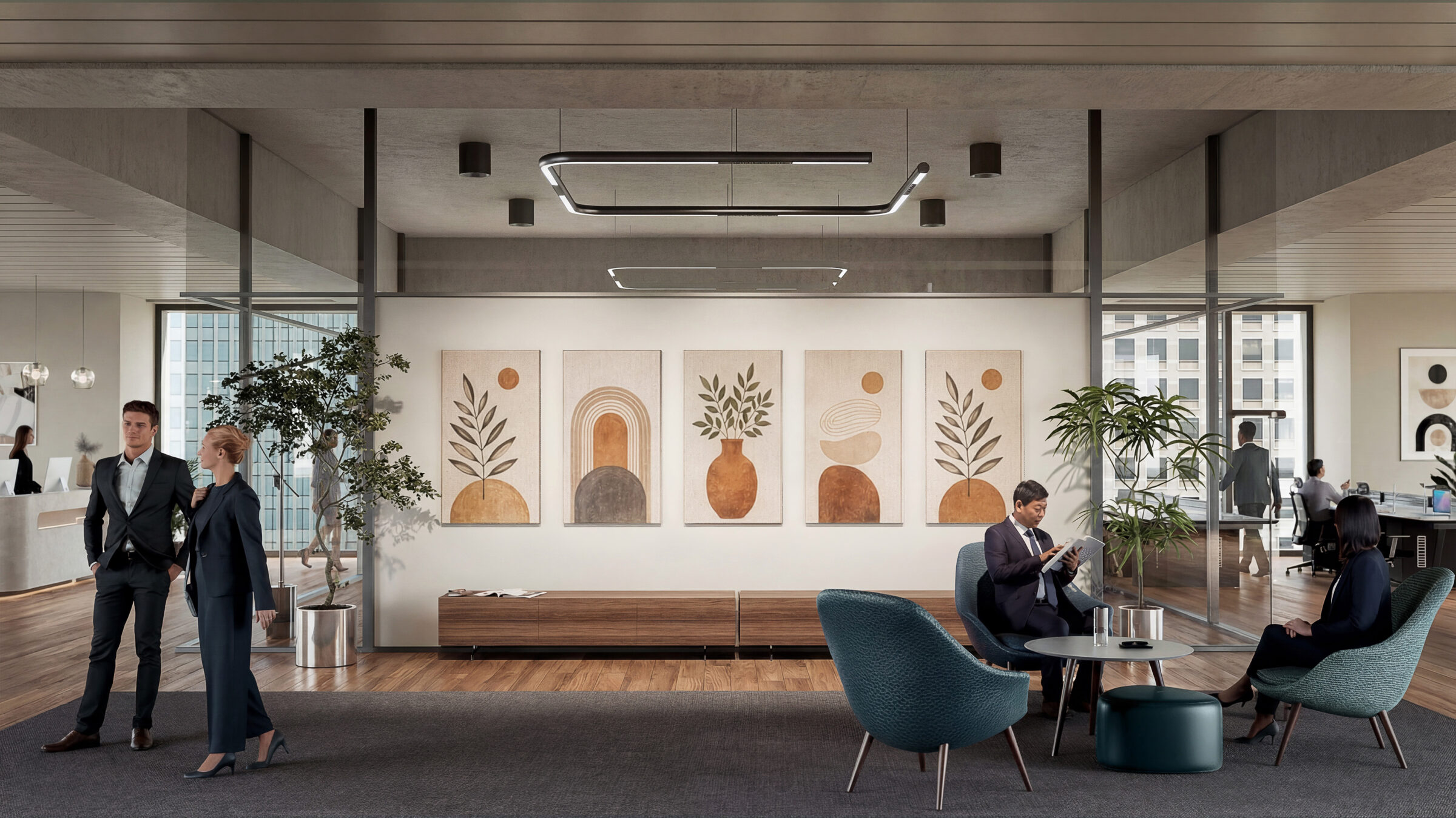


At Primacoustic, we don’t just provide comprehensive acoustic solutions; we support your work from conception to completion, helping you choose/customize solutions, offering online design and calculation tools, layout suggestions, data-backed product matching, and access to an extensive, trusted network of dealers and installers.
Like you, we aim to ensure the room and sound reinforcement systems complement, rather than complicate, the job of providing peak performance in every HOW project.
Explore Primacoustic Solutions for ProAV Integrators.