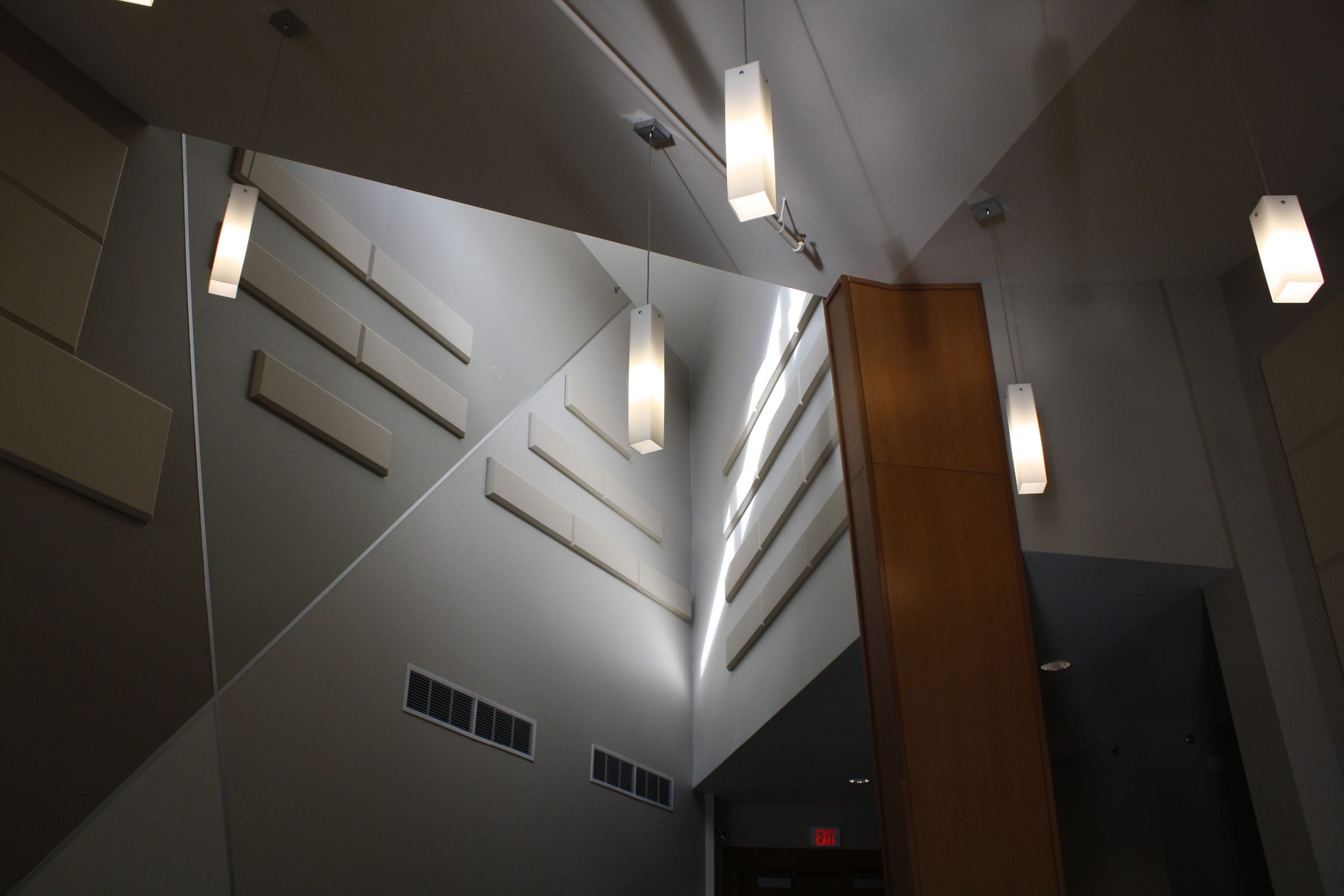
Key Takeaways
- Treating acoustics last limits design potential
- Sound quality drives user experience everywhere
- Treating small areas = big noise reduction
- Acoustic elements now double as design
- Primacoustic CEU courses help establish sound acoustic plans
Designing with Sound in Mind: From Retrofitting to Real Results
In any setting, from offices and critical listening environments to restaurants, concert halls, and houses of worship, early acoustic planning allows for more seamless integration and a more cohesive design palette overall.
Developing that plan may seem daunting, but Primacoustic is here to help. Whatever your project, whatever your needs, our updated CEU course will help you understand how to incorporate acoustics from concept to completion and avoid the common pitfalls that arise when acoustics are an afterthought rather than a priority.
1. The Common Mistake: Retrofitting Sound
“We just finished construction… and it’s too loud.”
It’s a familiar problem, and a phrase heard all too often in spaces where sound control solutions are relegated to the ‘to-do later’ portion of a project.
Think of it this way: your space looks stunning, but after people actually begin using it, if it doesn’t sound good, the reality sets in, and you’re forced to either ignore it or retrofit the space with acoustic treatments.
Increasingly, good sound has become a core expectation and an integral part of trends such as biophilic, sustainable, and brand-specific design.
And for good reason; No matter how ‘well designed’ a space is in terms of its form, if its function (and the efforts of those trying to function within it) is impeded because acoustic considerations aren’t top of mind, the result is a space that sets people on edge rather than at ease. Potentially leading to poor experiences overall, discomfort, and, notably in office and educational spaces, an inability to focus, diminished productivity, and, in some cases, noise-related health issues.
2. Acoustics = User Experience
Developing an acoustic strategy at the start of your project ensures effective, integrated solutions that enhance well-being, conversation, and connection – as well as the aesthetics of any room or space – regardless of what it’s used for.
Sound may not be the first thing you notice in a given space – you’ll probably focus first on the look of a room or the activity you’re looking forward to taking part in, but soon enough, if speech is muddy, or music unclear, harsh, or echoey, the noise will become all you’re able to focus on.
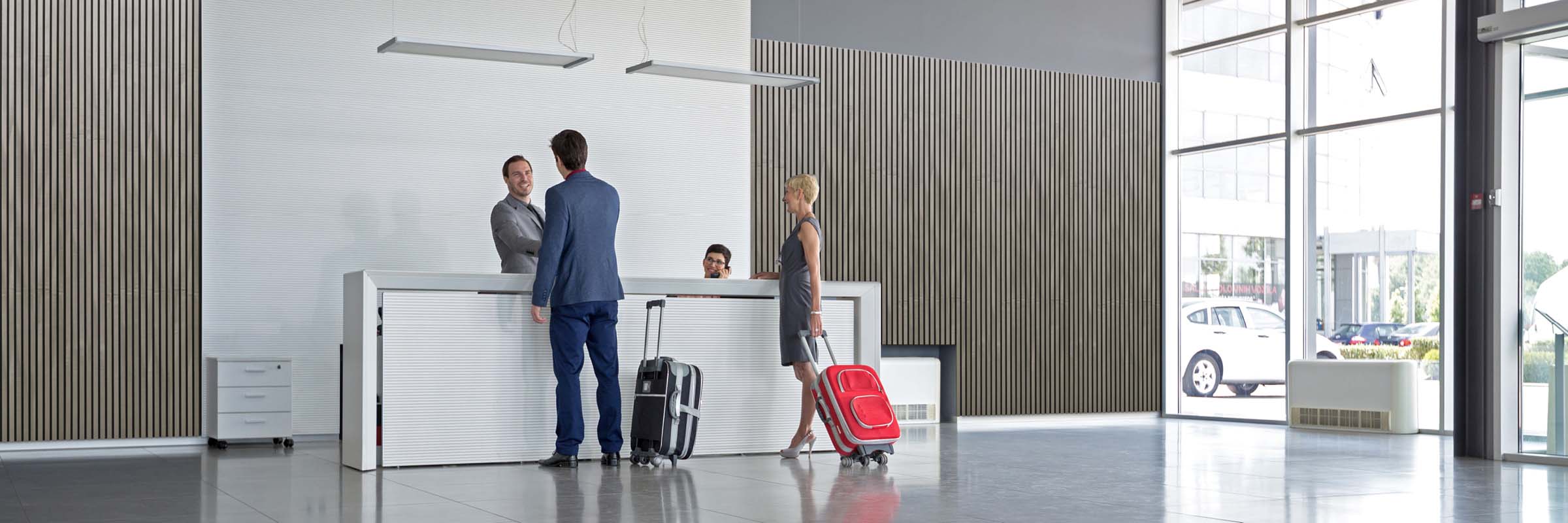
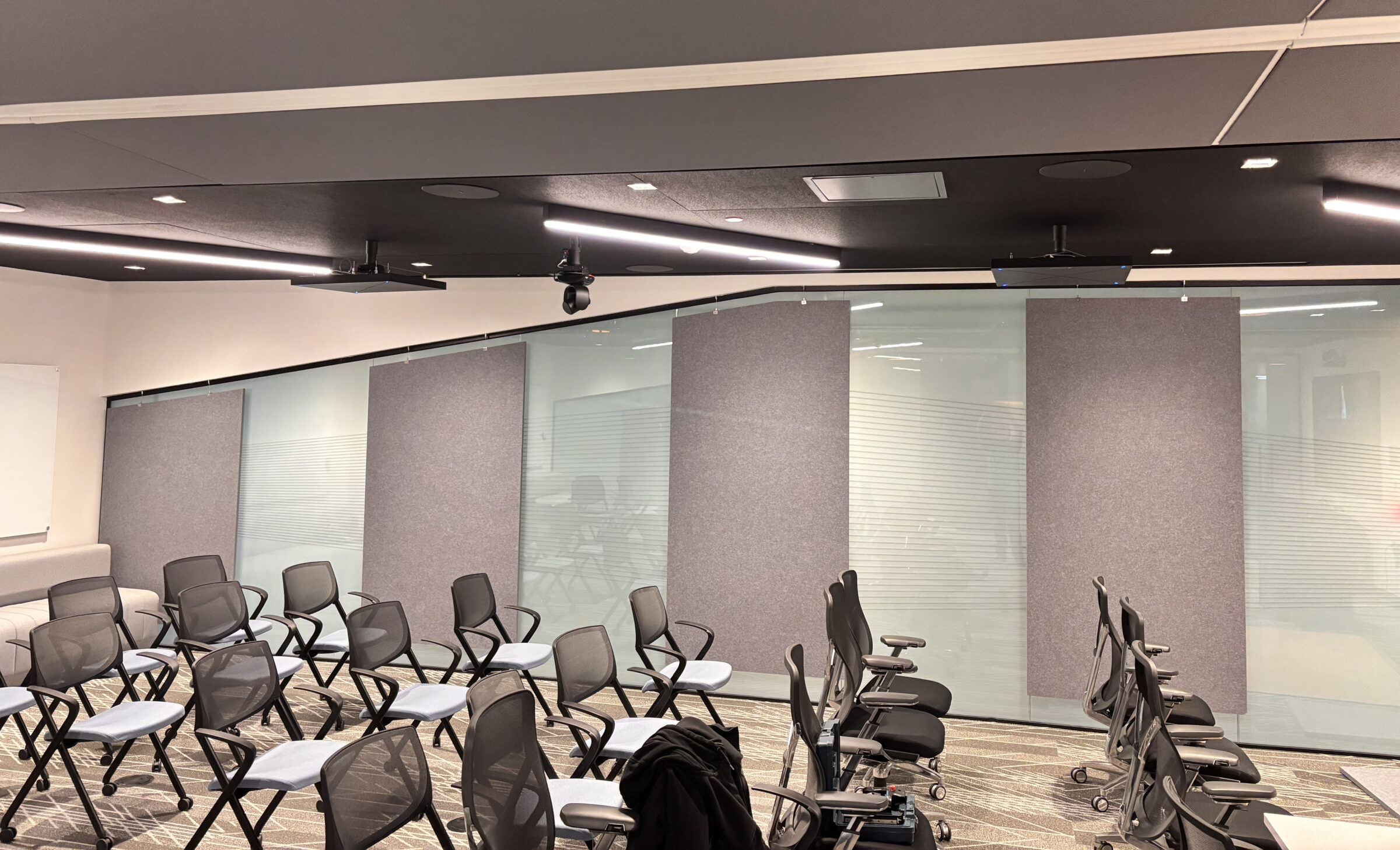
Offices
In an office setting, developing a comprehensive acoustic plan early on will enhance productivity and foster wellness once the job is complete: reducing reverberation, echoes, and background noise, and protecting workers from one of the most common sources of stress, noise fatigue.
In many spaces, treating just 17% to 25% of walls with broadband acoustic panels can reduce sound levels to a safe and comfortable level – and, when paired with ceiling treatments, offer an even more effective means of absorbing sound and reducing unwanted noise.

Restaurants
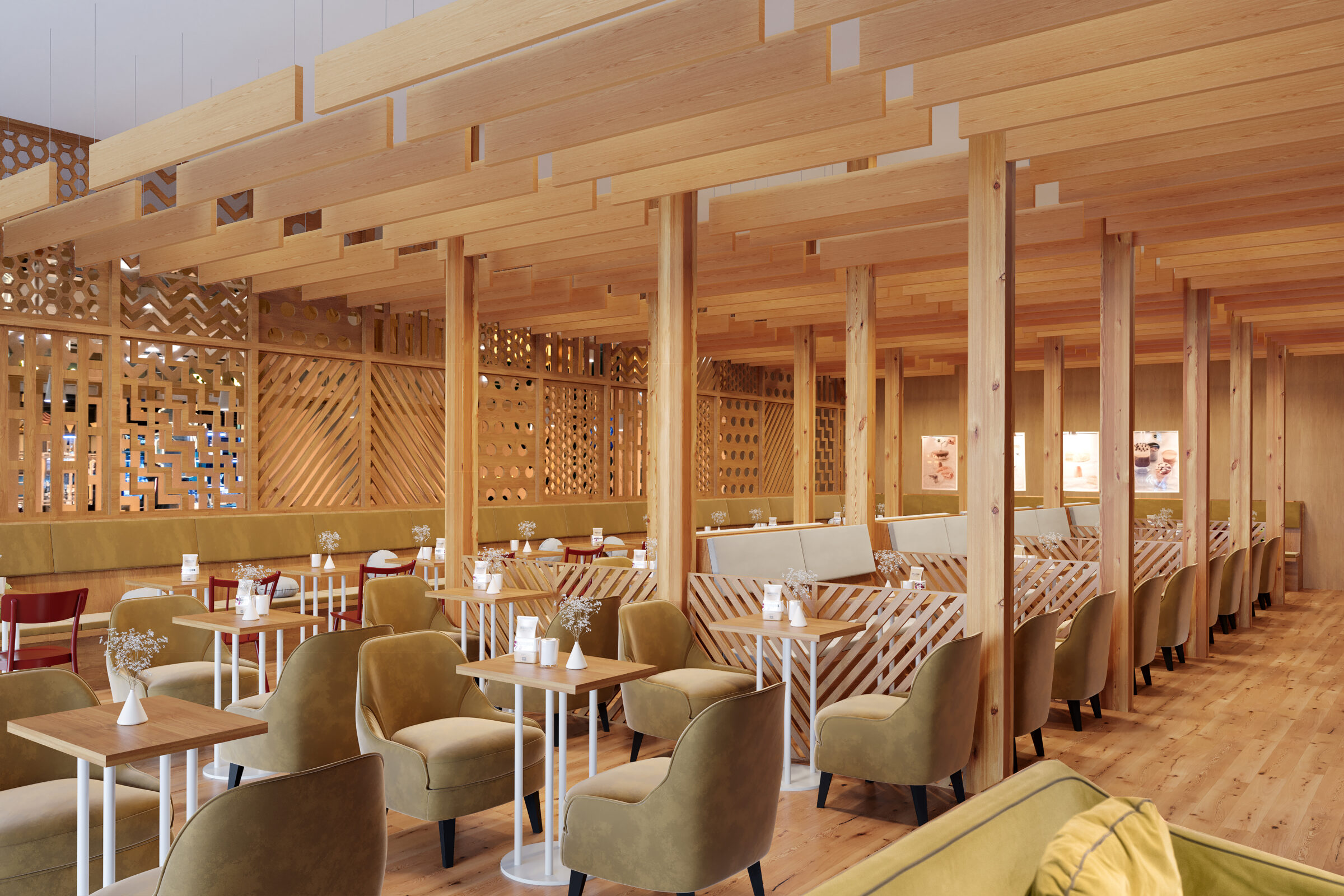
There’s a fine line between a vibrant setting and a noisy, distracting one. In recent years, noise has become diners’ primary complaint – accounting (according to a recent Zagat survey) for 25% of all restaurant complaints.
No matter how great the food, service, or look of a restaurant, when your staff struggles to hear your guests, and those guests struggle to hear each other, that dissatisfaction flows downstream. Impacting everyone, resulting in higher employee turnover, poor reviews, fewer return customers, and, inevitably, your bottom line.
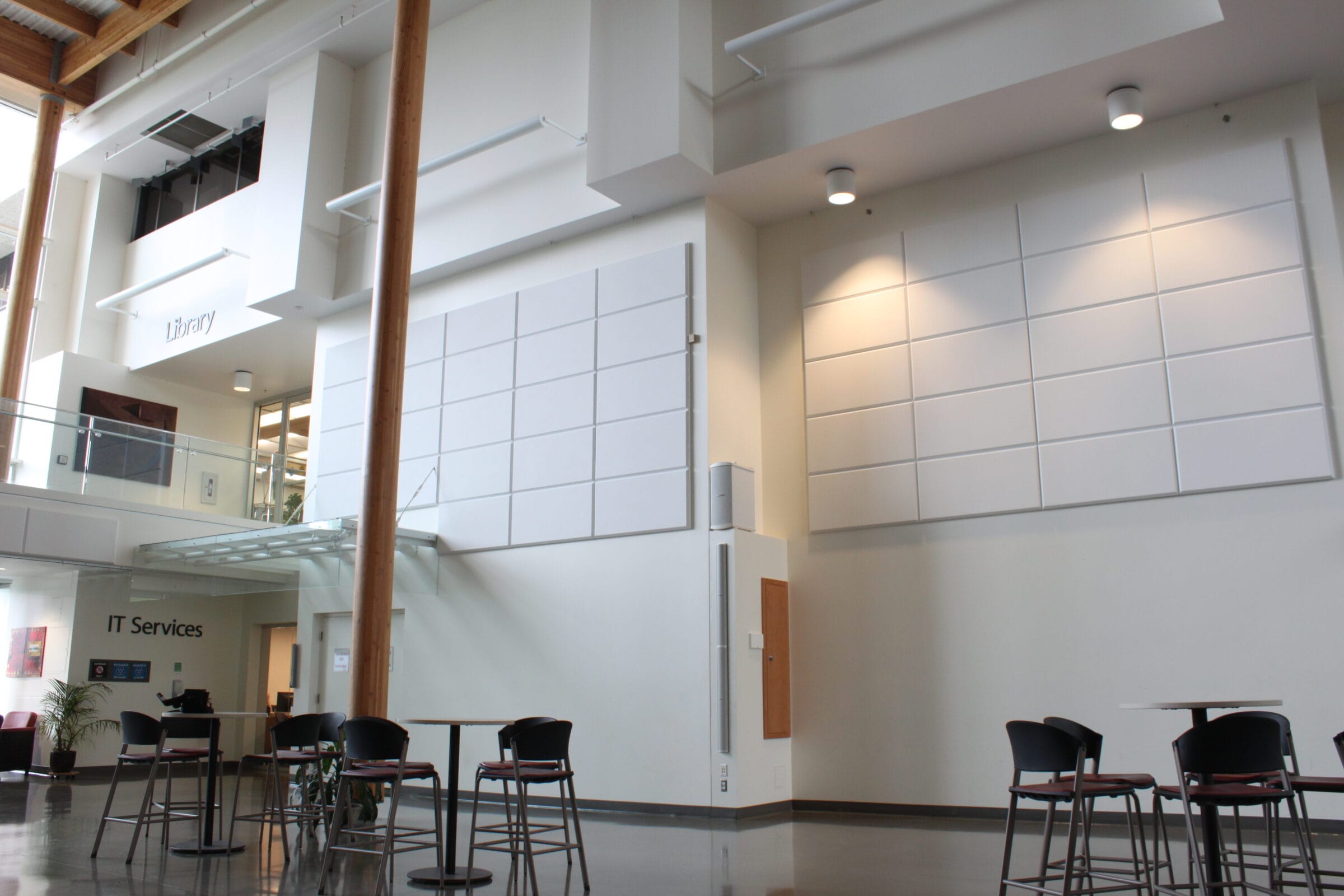
Schools
The math is simple – Students Hearing Better = Students Learning Better.
Over and over again, research supports that equation, with multiple studies drawing a direct correlation between noise and learning outcomes.
Again, applying acoustic treatment to just a portion of your space (even 17% to 20% of wall space) dramatically improves speech intelligibility and comprehension while also enabling teachers to teach effectively without straining to be heard.

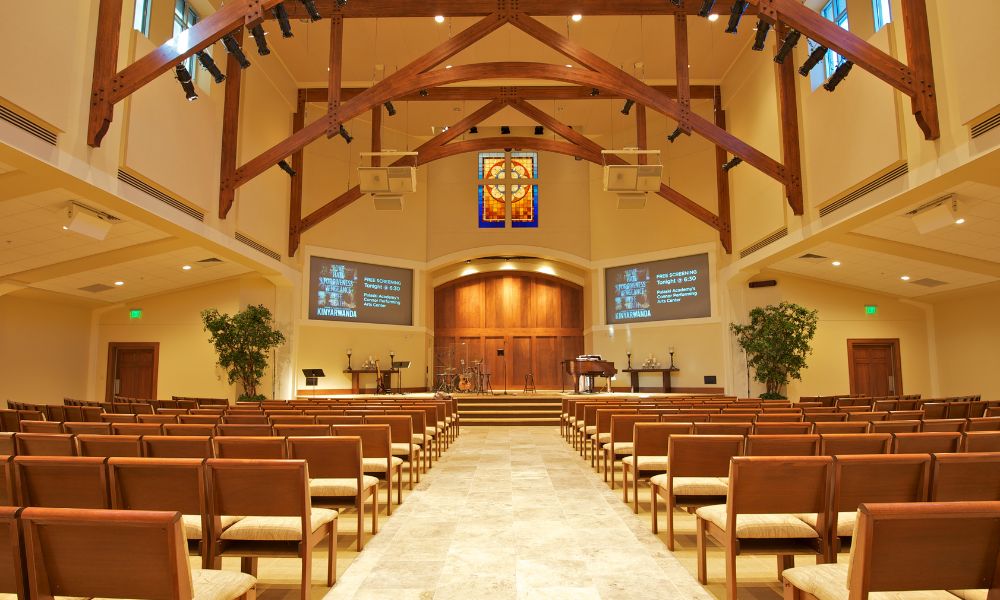
House of Worship
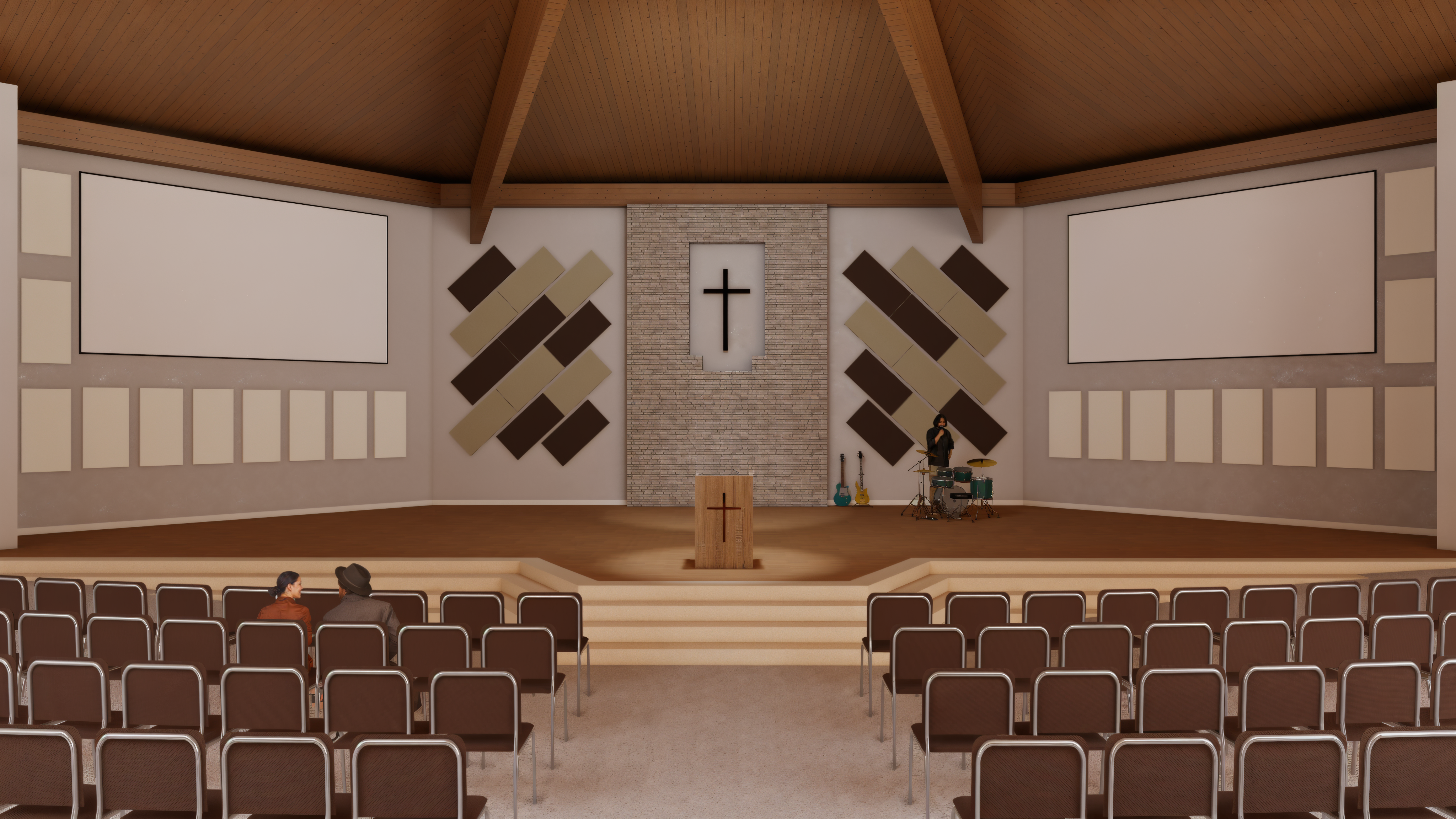
In worship spaces, clarity is absolutely essential.
Whatever the style of worship, whether it depends primarily on the spoken word, traditional or contemporary music, choirs, full praise bands, or a mix of all of the above, balance is key. Every worship space is different and therefore requires a solution tailored to enhance connection, inspire worship, and ensure the Word is heard.
3. Sound as a Design Language
From sculptural ceiling treatments to paintable and printable acoustic wall panels as artful companion pieces to a space’s visual story, acoustic panels and sound control solutions are becoming increasingly important not just as sound control, but as an integral part of our design language.
Primacoustic products, such as our Archadia and Broadway lines, provide designers the freedom to use acoustic treatment to elevate aesthetics without compromising sound control.

4. The Advantage of Early Planning
Dealing with acoustic treatments as an afterthought can also contribute to draining your budget. By contrast, adopting a sound strategy for acoustic issues at the beginning of a build means you’ll likely need fewer panels, experience a smoother installation process, and be able to integrate acoustic solutions seamlessly with other critical infrastructure, such as lighting and HVAC systems.
5. Looking Forward: The Future of Acoustic Design
Acoustic design is becoming about more than just good sound – it’s about creating great experiences, enhancing functionality, aesthetics, and comfort.
In essence, contemporary acoustic design emphasizes wellbeing, sustainability, and beauty, transforming sound control into a tool for not just making a space sound great, but feel great.
That’s a trend that’s here to stay and will only deepen the importance of thoughtful, pre-planned acoustical design.
Visit our content library for more information about acoustics, our products, and educational resources.
6. Learn More with Primacoustic’s CEU Courses
The better we all understand the positive impact of early acoustic planning and the necessity of choosing treatments that not only suit our sonic needs but are an integral part of our design language, the more likely we are to achieve the goals we hope to in and with any space.
In service of that need, Primacoustic’s updated CEU courses help architects, designers, and end-users understand how to incorporate acoustics early – simply and seamlessly.

Want to learn more about the fundamental principles of acoustics and how to develop creative acoustic integration strategies for any design/build?
Sign up for Primacoustic’s free ‘Lunch & Learn’ CEU courses today and start designing with sound in mind.