The Hidden Cost of Poor Acoustics
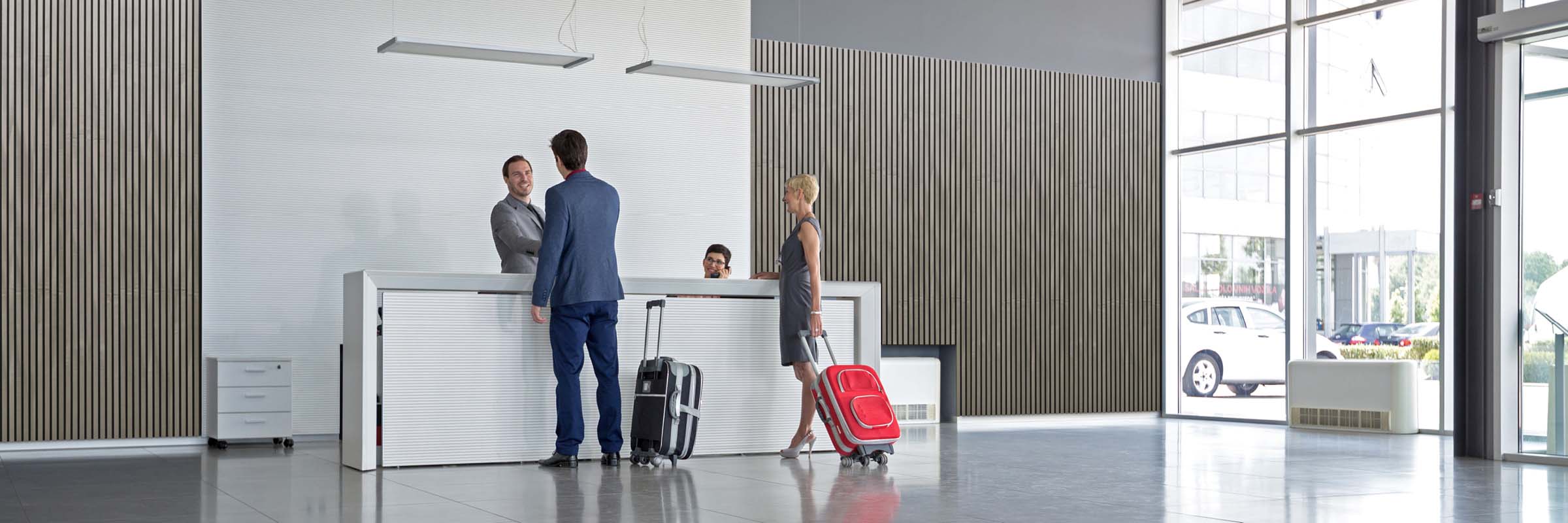
In a busy workplace or any high-traffic shared space, poor speech intelligibility is sure to decrease comfort and, potentially, productivity.

A lack of speech clarity is often caused by uncontrolled ceiling reflections; an issue that’s only exacerbated if you speak louder, and/or pump up the volume on whatever sound reinforcement technology is in use. That’s because ceilings are usually the largest sound-reflecting surfaces in any room; the more sound energy hitting a ceiling, the less clarity throughout the entire space.
Why Speech Clarity Is an Acoustic Problem (Not a Volume Problem)
Higher sound levels do not correspond with better intelligibility, particularly when it comes to speech. The central problem is how sound travels and arrives at its intended destination (the listener): reflections bouncing off hard surfaces, which arrive slightly after the direct sound from a speaker or loudspeaker at the listener’s ears, making words harder to distinguish.
The more sound energy in a space, i.e., the louder the volume, the more reflections and reverberation are created, further obscuring detail and reducing clarity, rather than improving intelligibility.
- Sound Reflections are created when sound waves hit hard surfaces and bounce back into the room.
- Reverberation Time (RT60) is the amount of time a sound continues to linger in a space after the primary (direct) source stops.
- Overlapping Sound Energy refers to the combination of sounds coming directly from a source with other sounds and reflections.
Understanding speech involves a significant amount of cognitive processing. Not something we’re likely to think about, unless it’s interfered with, which is what’s happening when you’re trying to separate what someone is saying from other primary sound sources, background noise, and the reflections they create. Resulting in an environment where you hear plenty, but understand little.
To achieve the appropriate balance, you need a solution that provides balance sonically and, most often, aesthetically, which makes dealing with ceiling reflections an excellent starting point.
The Ceiling’s Role in Shared Spaces
Since a ceiling is usually the largest uninterrupted sound-reflecting surface in a room, minimizing those reflections with acoustic treatments is often the best solution for enhancing clarity and comfort in a space.
That’s key in large and smaller rooms, particularly where windows, entryways (and/or art, wall décor, or branding elements), limit the ability to deploy acoustic wall panels.
High vs. Low Ceilings
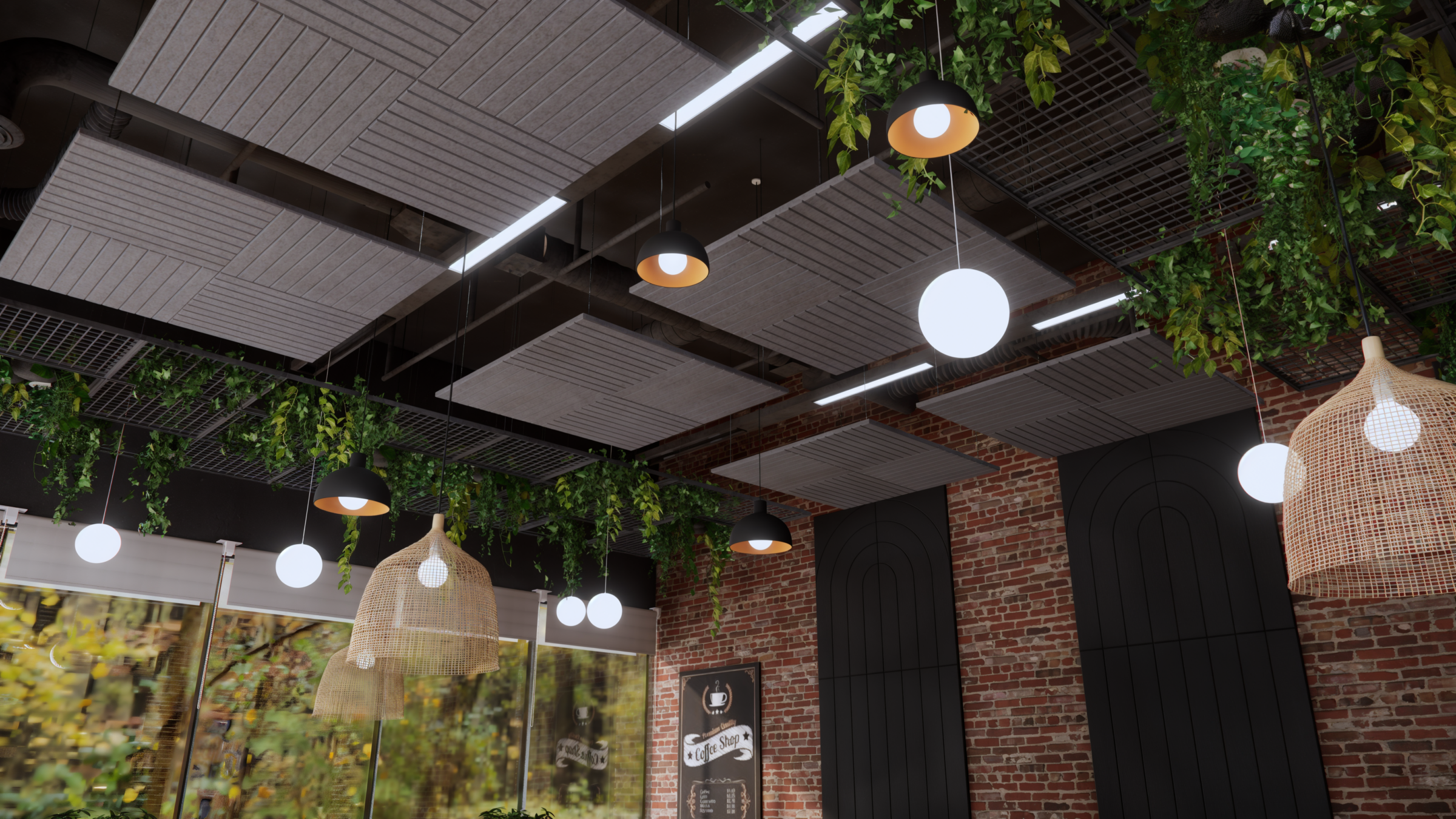
High ceilings increase the distance and time sound waves take to travel to a surface, reflect off it, and travel back to your ears.
Additionally, because sound waves are multi-directional, a single source will hit a reflective surface at different times, taking different paths, increasing reverberation, echoes, and overlapping sounds.
Ceilings are typically constructed from hard surfaces that reflect, rather than absorb sound, which then continues on its way, hitting walls and floors – adding multiple, secondary reflections to the mix; further decreasing clarity.
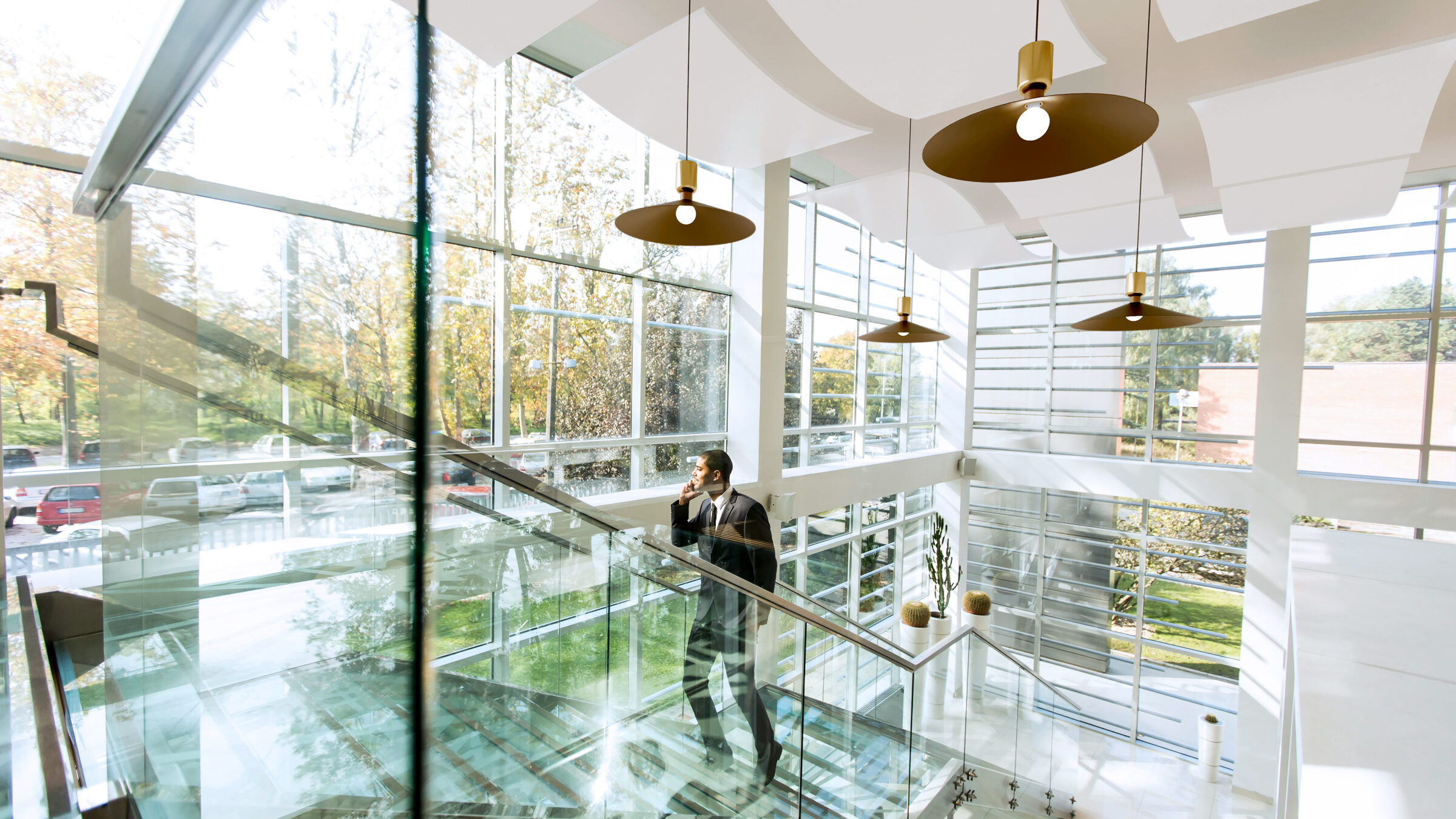
Although sound reflects off and hits a listener more quickly in a low-ceilinged room, acoustic treatments are often necessary to absorb early reflections, reduce or eliminate echoes, prevent standing waves (created by sound from bouncing between the floor and ceiling), and avoid low-frequency buildup.
Consequently, treating a ceiling helps control sound and mitigate these issues throughout an entire space, not just in certain areas, and is often more effective in reducing reverberation and echo than partially treated walls.
Why Ceiling Acoustics Work Especially Well in Shared Environments
More people speaking and moving means more background noise. Add in the hum of HVAC (and even lighting systems) and the clatter of people using various machines and devices, and you’ve got even more uncontrolled sound reflections, reverberation, etc.
Adding acoustic ceiling treatment improves speech clarity, helps enhance a listener’s understanding and comfort, and (for the speakers themselves) reduces vocal strain in any space where people gather.

Blades vs. Baffles: Different Tools for Different Ceiling Conditions
There are a variety of solutions available (including ceiling clouds, panels, and ceiling tiles). The solution you choose naturally depends on a variety of factors, including the application and use of a room, and its form, design palette, and size, among other considerations.
Primacoustic’s EcoScapes Blades and Dimensional Baffles offer a uniquely flexible solution for adding visual ‘rhythm’ to a room, defining/delineating zones within a space, and complementing, not interfering with, your facility’s existing infrastructure and function.
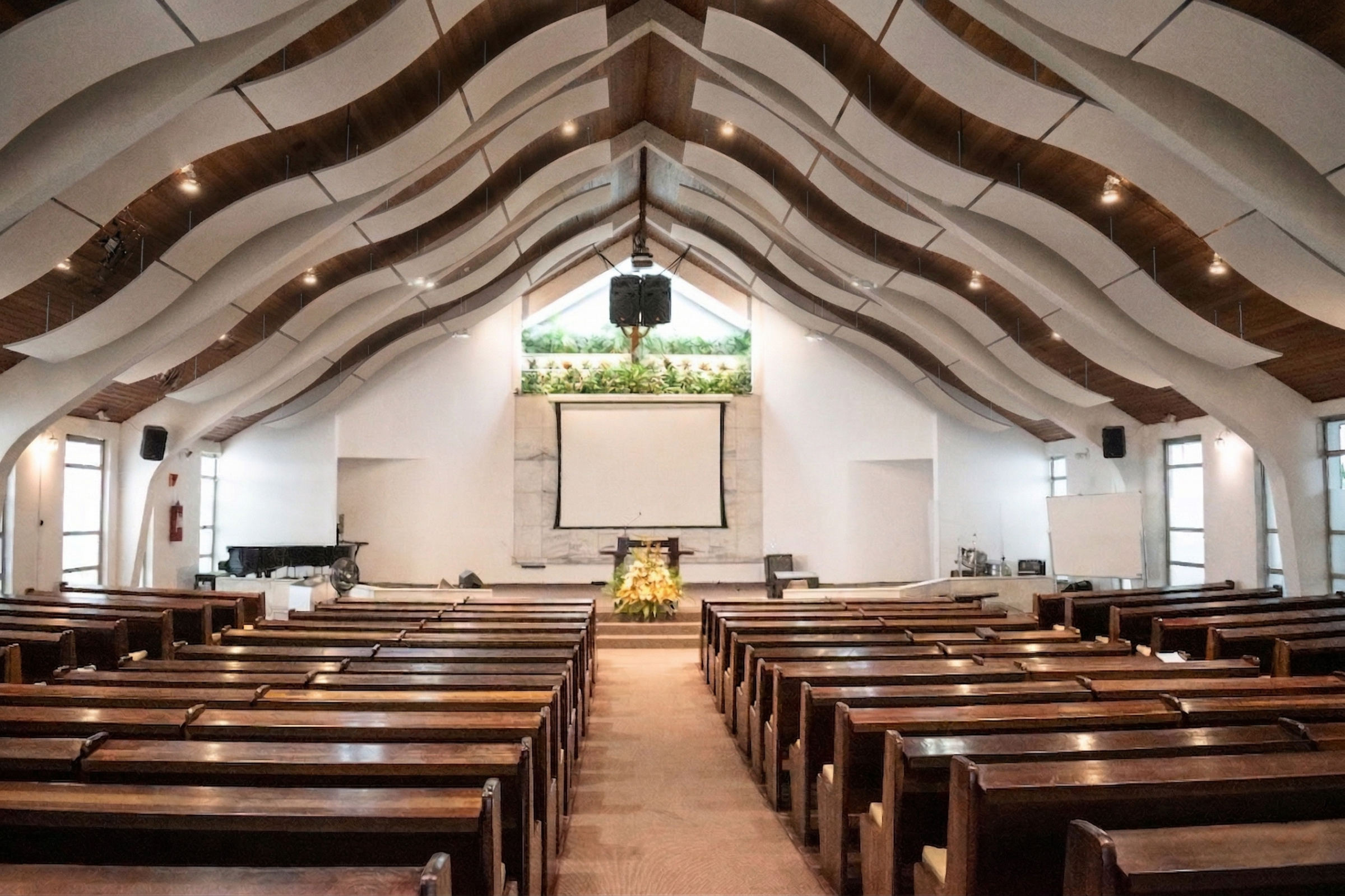
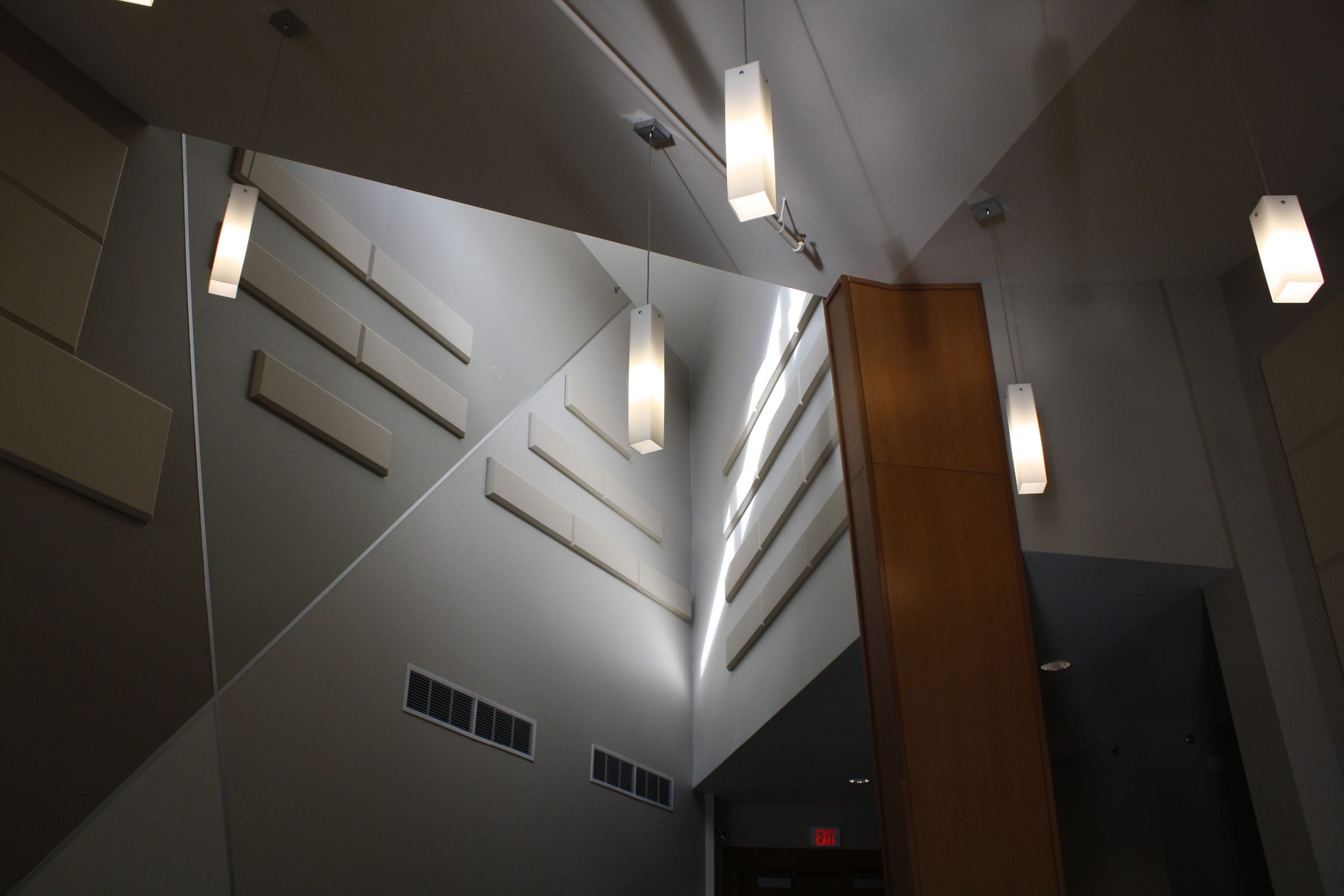
Blades can be used to create a range of different architectural expressions to solve acoustic challenges and enhance the look of any space. They are typically mounted adjacent to a ceiling surface and are particularly useful in reducing the visual impact of treatment in spaces with lower ceilings.
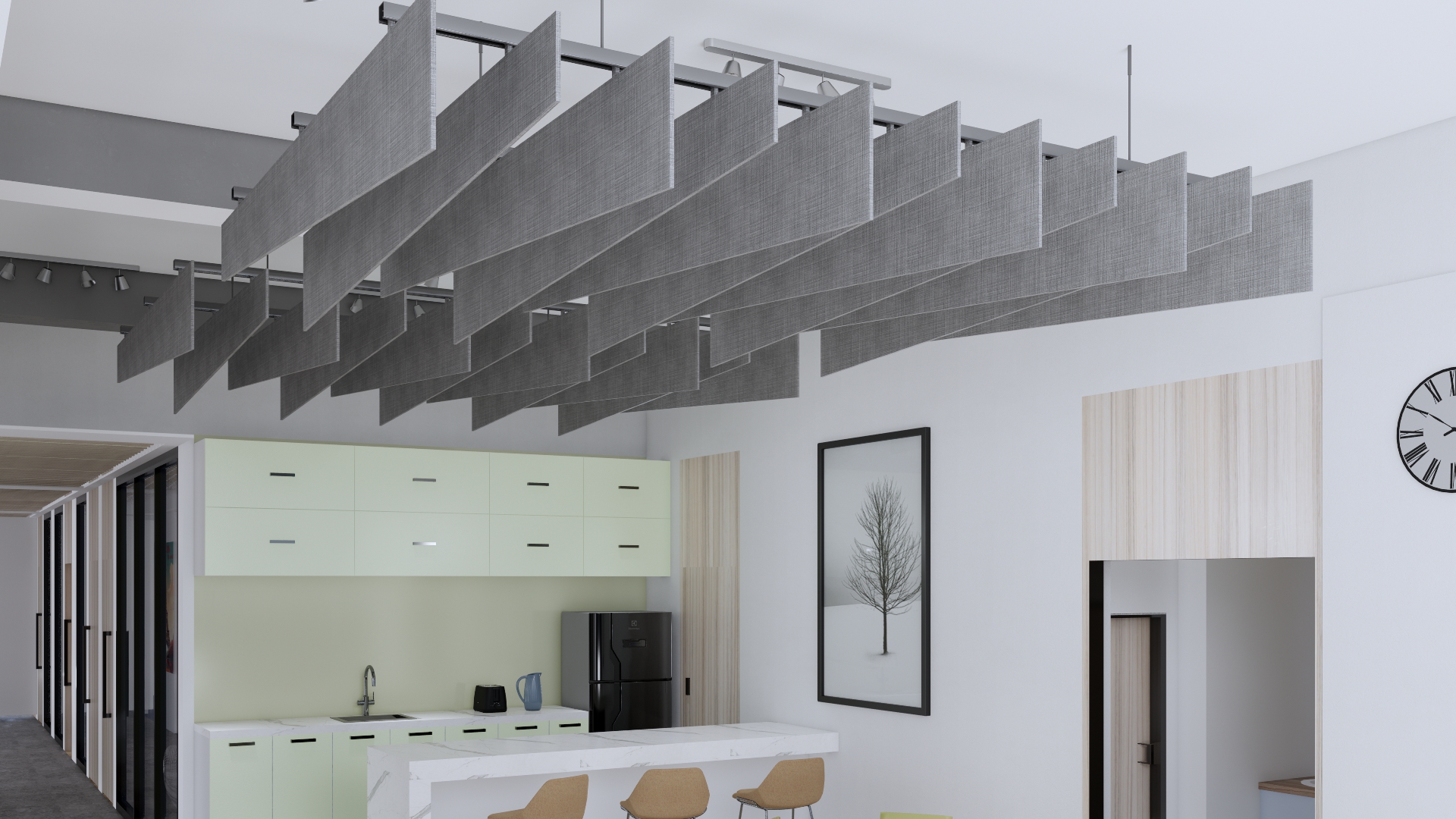
Multiple shapes and formats can be deployed to create a clean, angular look, imply movement via a rhythmic ‘wave-like’ effect, or combined to create signature, functional architectural compositions.
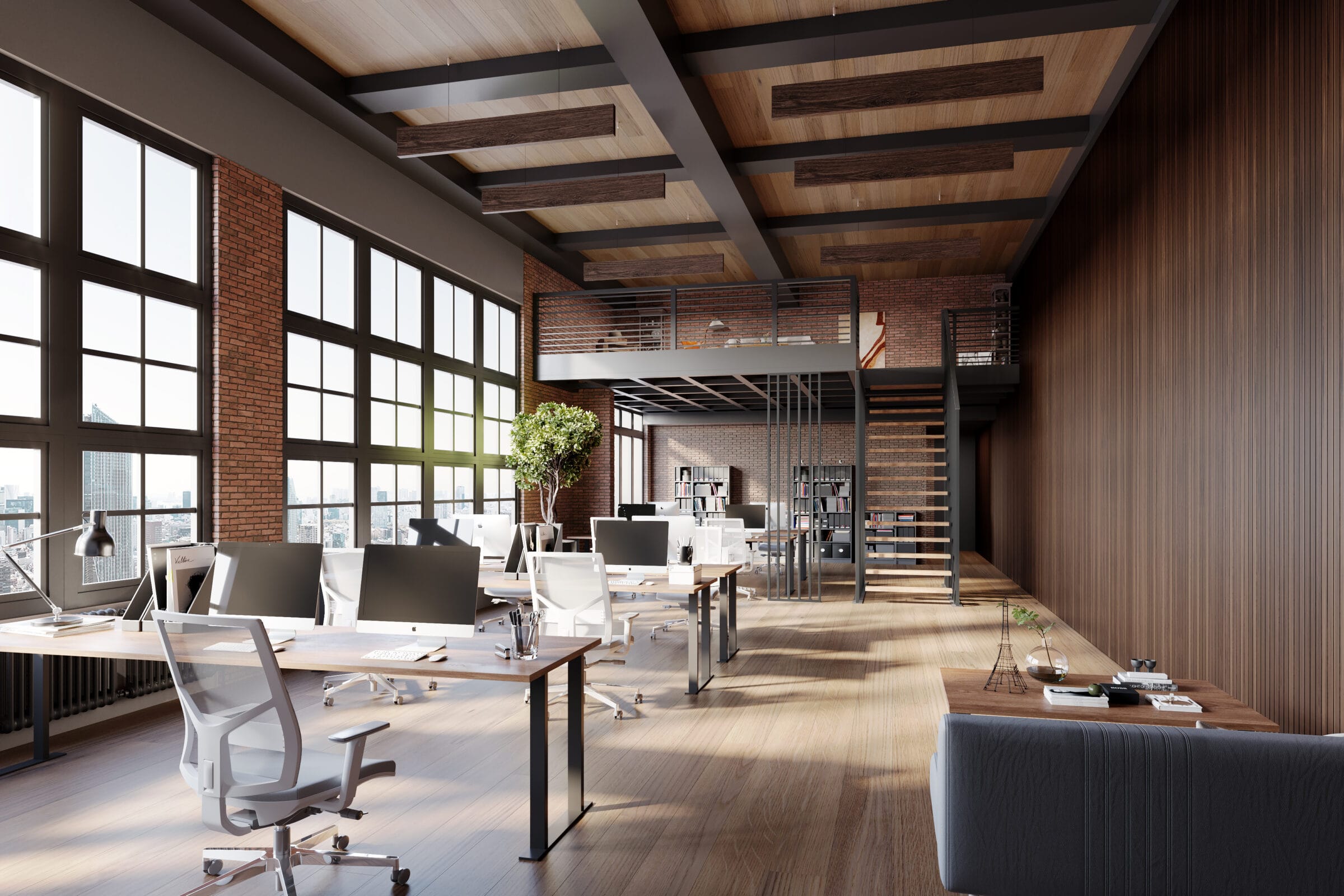
Dimensional Baffles, by contrast, appear suspended in space, making them particularly effective (and visually striking) in large, high-ceilinged spaces. Their 3-D format also makes them ideal for complementing existing structural and architectural elements such as exposed beams and rafters.
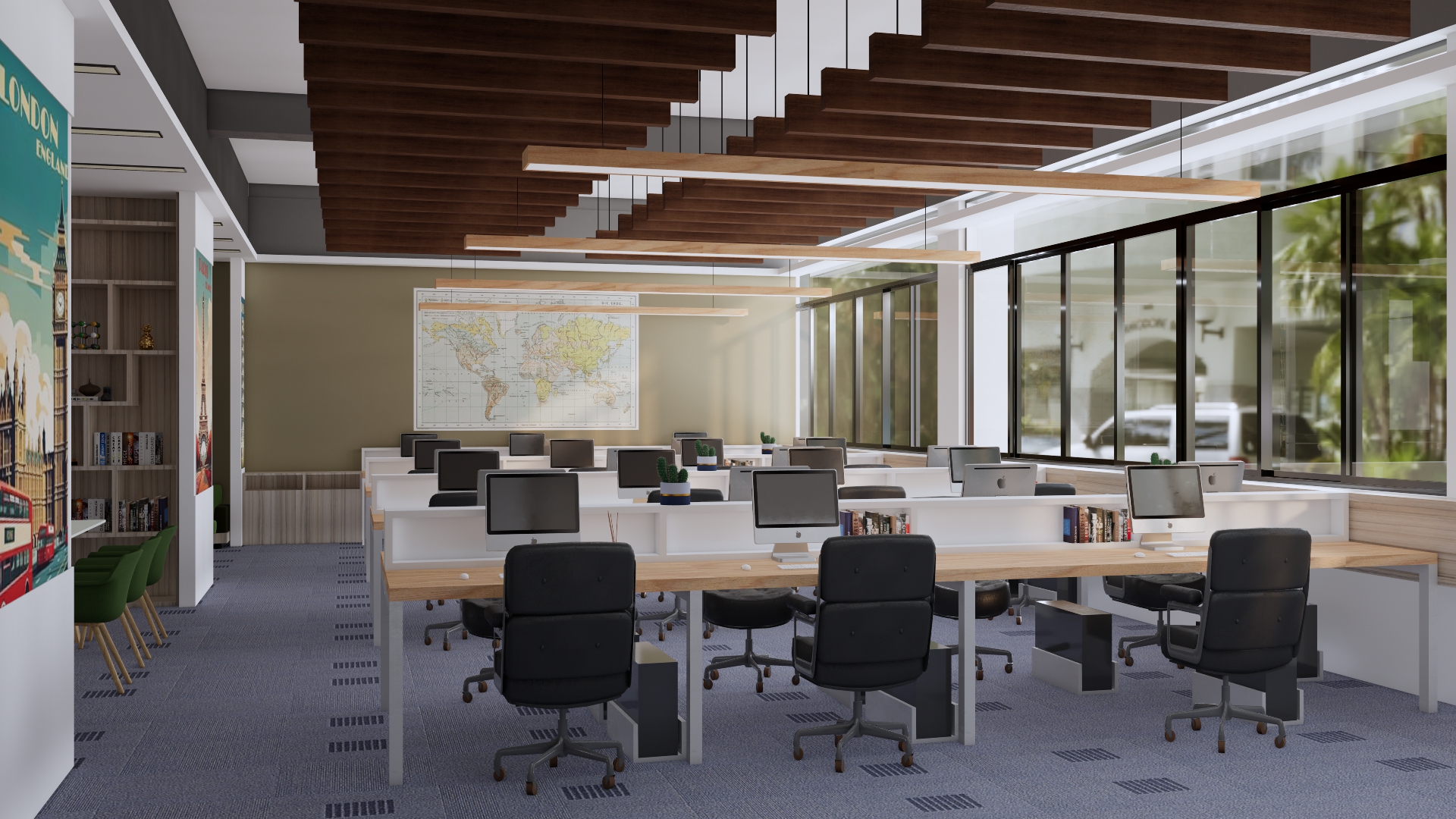
Acoustic Performance Without Compromising Design
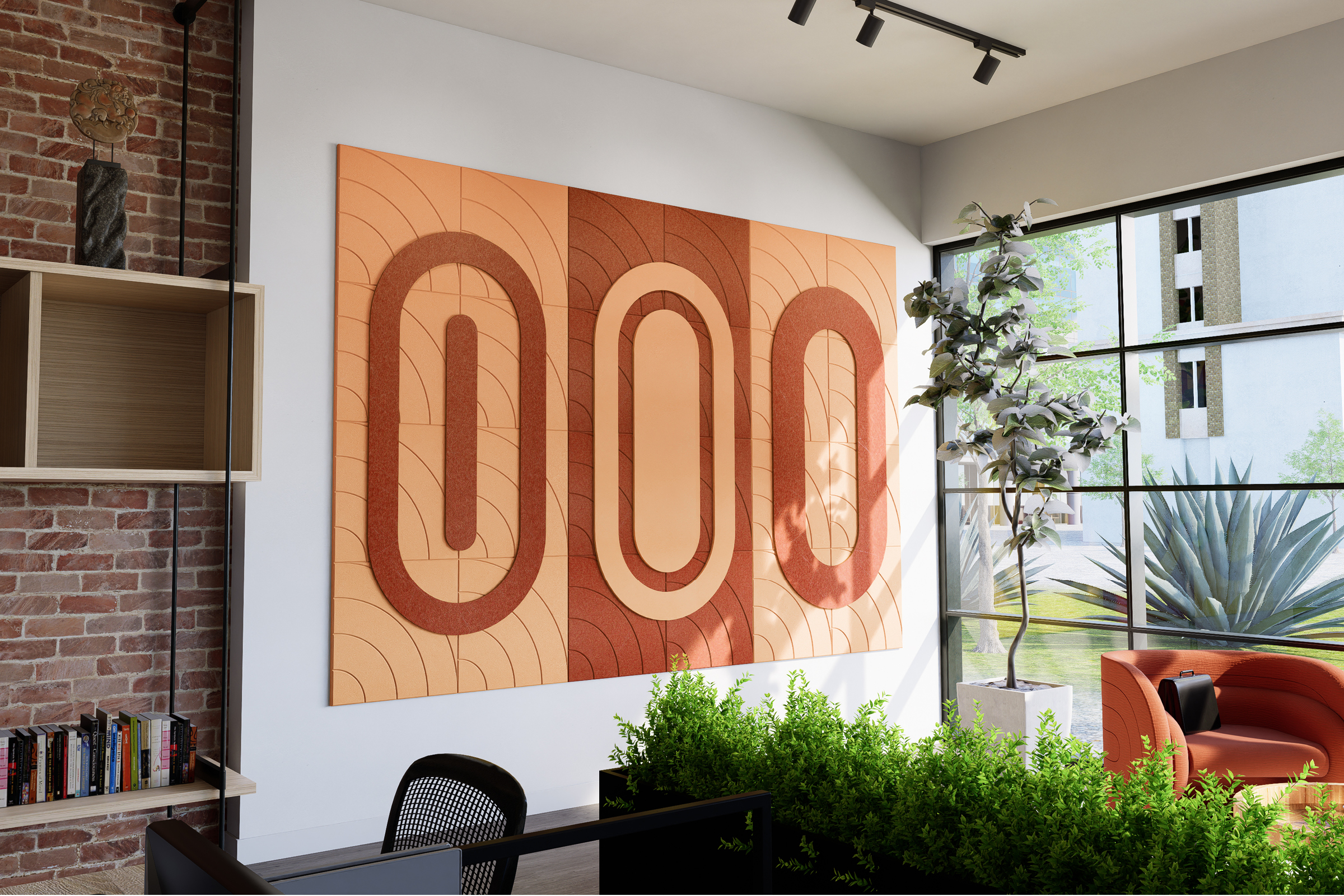
The result is an effective, design-forward sound control system that leaves plenty of space for branding, art, and custom-painted or finished walls – without blocking windows from letting the light in.
Like all EcoScapes products, our Blades and Dimensional Baffles are constructed from post-consumer PET, a recycled and recyclable material that offers exceptional sound absorption, design-forward flexibility, and contributes to LEEDS and WELL certifications.
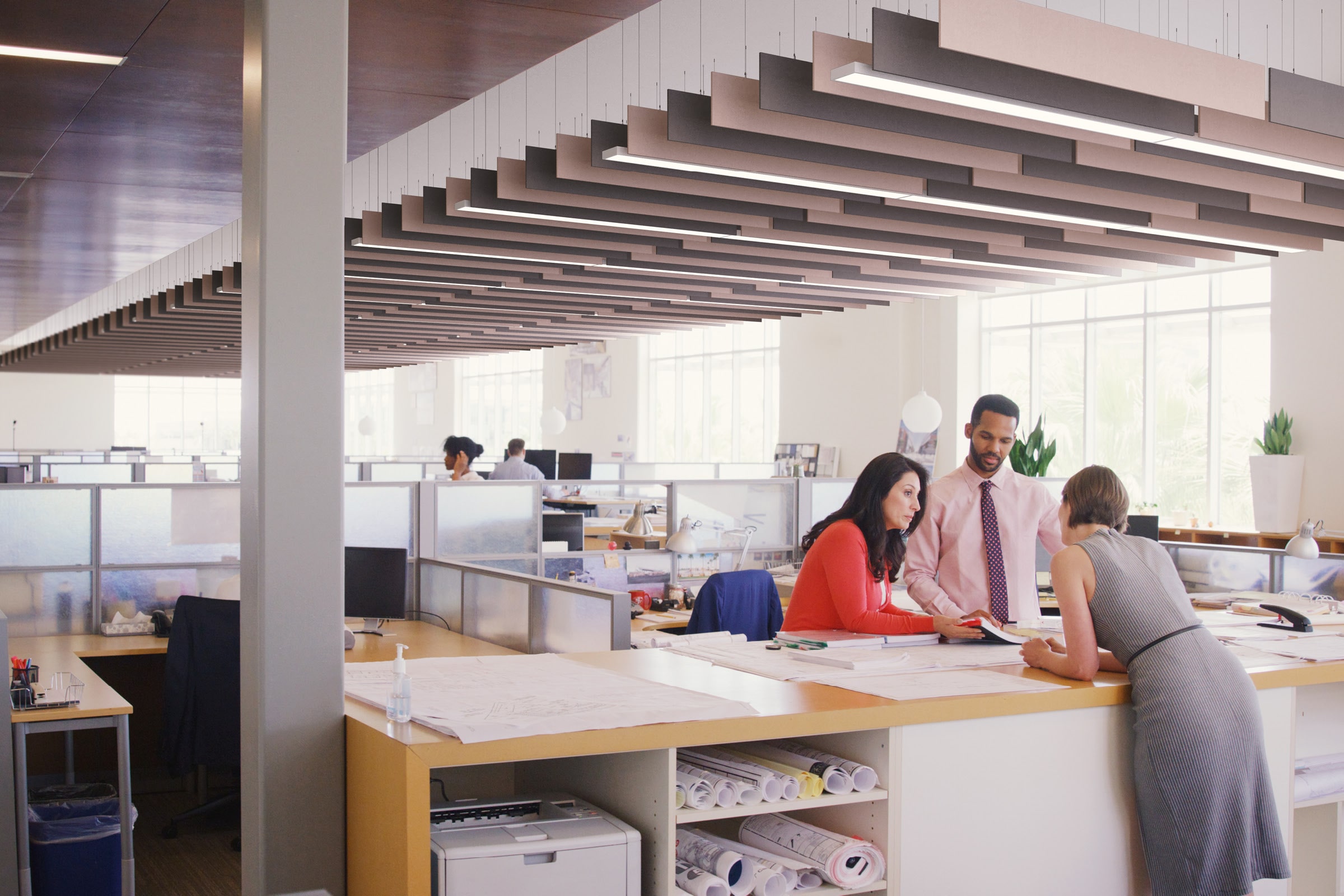
Available in a wide range of colours, finishes, and printable options, EcoScapes PET Blades and Dimensional Baffles contain no formaldehyde, VOCs, glues, or binders, and are extremely durable, making them safe and easy to maintain for years without noticeable wear or discolouration.
Conclusion: Designing Spaces That Are Comfortable to Use
An acoustically comfortable space not only sounds better. It feels better because it supports and encourages communication, focus, and usability.
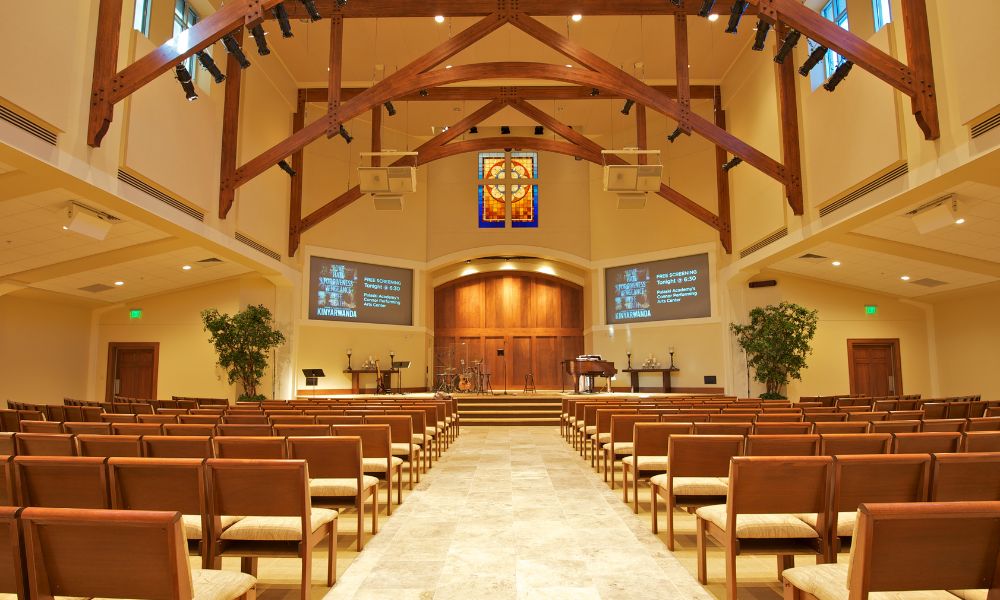
When it comes to maximizing intelligibility in a space, whether it’s used for work, play, entertainment, or worship, ceiling treatment is often the most efficient and least invasive first move.
Considering a ‘ceiling-first’ approach to sound control?
Discover the possibilities Primacoustic’s EcoScape Blades and Dimensional Baffles offer, or contact us directly at Primacoustic.com to book a consultation.